
Between the 16th and 18th centuries, Frankfurt-am-Main developed into one of the most important commercial and financial centres of the Holy Roman Empire. Its strategic location, trade fairs, banking houses, and international merchant networks made it a hub connecting northern and southern Europe.
Strategic Location in European Trade
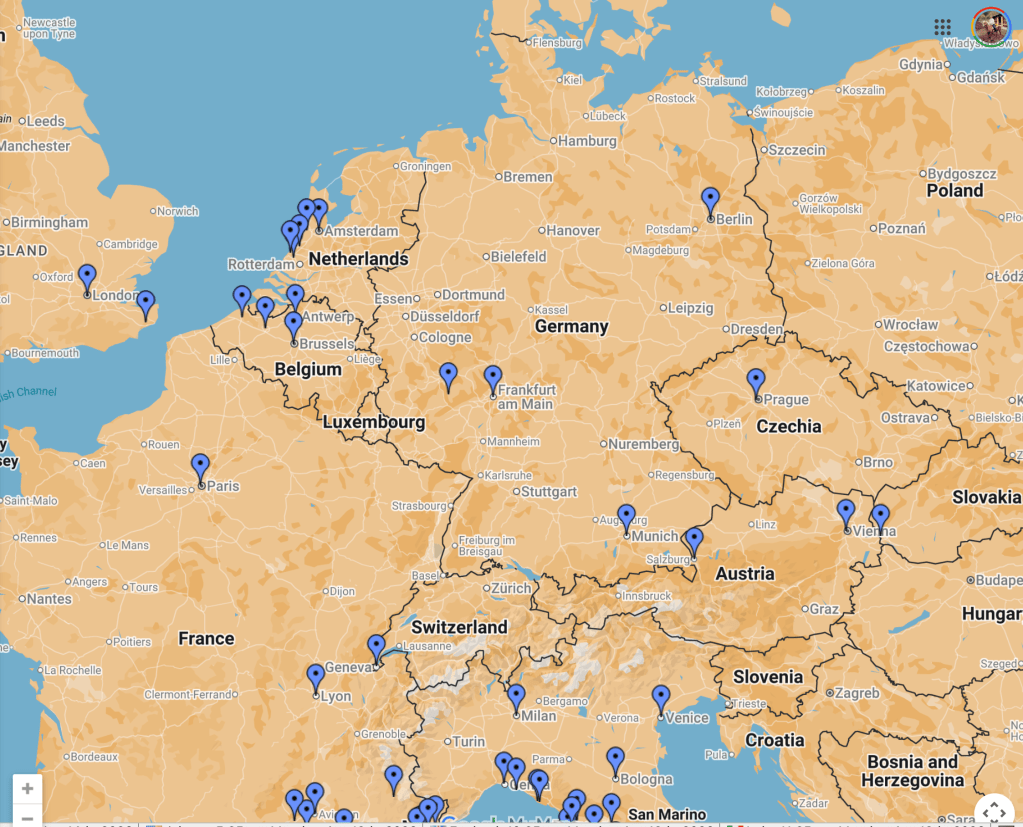
Frankfurt’s success began with geography. The city sits at the crossroads of major trade routes linking Antwerp and the Low Countries, Amsterdam, southern Germany and Augsburg, and Venice and the Mediterranean trade network. The Main River connects Frankfurt to the Rhine River system, allowing goods to move between the North Sea ports, central Europe, or Italy and the Alpine trade routes. This geographic advantage made Frankfurt a natural meeting point for merchants from across Europe.
The Frankfurt Trade Fairs
A major driver of Frankfurt’s growth was its famous trade fairs. The Frankfurt Trade Fair had existed since the Middle Ages but became particularly important during the 16th and 17th centuries. Three major fairs were held annually: Spring Fair (Fastenmesse); Autumn Fair; and Book Fair.
Merchants from across Europe gathered to trade in cloth and textiles, spices, metals and tools, books and printed materials, and luxury goods. The Frankfurt Book Fair, which still exists today, became the largest book market in Europe during the 16th century, especially after the spread of printing.
Financial and Banking Growth
As commerce expanded, Frankfurt developed into a financial centre. Merchant bankers handled: international payments; credit for merchants; currency exchange; and, long-distance trade financing.
Prominent merchant families operated across European financial networks. Among the important banking families connected to Frankfurt trade were:
- the De Neufville family
- the Bethmann family
- later the Rothschild family
Frankfurt’s fairs became places where international bills of exchange were settled, making the city a financial clearing centre.
Religious Refugees and Economic Growth
Frankfurt also benefited from the migration of Protestant refugees during the religious conflicts of Europe.
Many settled in German cities, including Frankfurt, bringing banking expertise, international trade contacts, manufacturing skills, and French commercial connections. These refugees helped strengthen Frankfurt’s international merchant class.
Political Stability and Autonomy
Frankfurt held the status of a Free Imperial City within the Holy Roman Empire. This status gave the city political autonomy, favourable trade laws, relative religious tolerance, and protection under imperial law.
Frankfurt also hosted imperial elections and coronations of emperors, which attracted diplomats, nobles, and merchants.
Expansion of International Trade Networks
By the 17th and 18th centuries, Frankfurt merchants were connected to global trade. Trade networks linked the city with Amsterdam’s shipping and finance, London’s markets, the Baltic grain trade, Mediterranean luxury goods, and colonial products such as sugar, coffee, and tobacco. Frankfurt merchants often acted as intermediaries, financing and distributing goods across Europe.
Frankfurt by the 18th Century
Thus, by the 1700s, Frankfurt had become a major European trade fair centre, a banking and finance hub, a meeting point for international merchants, and a cultural and intellectual centre. Its economy was built on commerce, finance, and international networks, laying the foundation for its later role as Germany’s financial capital.
During the 17th and 18th centuries, a powerful financial network emerged linking Amsterdam and Frankfurt am Main. Much of this network was operated by Huguenots—refugees who had fled religious persecution in France.
Families such as the De Neufville family became central figures in a system that financed trade, moved money across borders, and connected the commercial economies of northern Europe.
Why Amsterdam and Frankfurt Became Linked
The two cities played complementary economic roles.
Amsterdam
In the 1600s, Amsterdam was the financial capital of Europe. It had:
- the Dutch East India Company, the world’s largest trading company
- the Bank of Amsterdam, one of the most trusted banks in Europe
- massive global shipping networks
Frankfurt
Frankfurt served as the continental financial crossroads. Through its trade fairs, merchants from the German States, Italy, Switzerland and Eastern Europe met to conduct business and settle accounts. Consequently:
Amsterdam = global capital and maritime trade
Frankfurt = inland clearinghouse for European commerce
Huguenot bankers connected the two.
How the Network Actually Worked
The Amsterdam–Frankfurt system operated through merchant banking families who maintained branches or trusted relatives in multiple cities.
Typical network structure:
Amsterdam (capital and international trade)
      ↓
Frankfurt (financial clearing and credit distribution)
      ↓
German states, Switzerland, Italy, and Eastern Europe
These bankers handled several critical financial services.
Bills of Exchange
Instead of moving gold or silver across Europe (which was risky), merchants used bills of exchange.
Example:
- A merchant in Frankfurt needed to pay a trader in Amsterdam.
- A banker in Frankfurt issued a bill of exchange.
- The partner bank in Amsterdam paid the recipient.
- Accounts were later settled between the banks.
This system enabled international payments without transporting money.
Family Networks Made the System Trusted
As we have seen, events had forced many skilled Protestant merchants to leave France. These refugees brought financial knowledge, international contacts, commercial discipline and multilingual abilities. Because they were outsiders in their new countries, they relied heavily on cross-border cooperation with fellow refugees. This unintentionally created highly efficient international banking networks. An important reason the network worked so well was family connections. Many Huguenot merchants:
- married within refugee communities
- operated branches run by relatives
- trusted partners who shared language and religion
Several unique factors made this system dominant.
Information Flow: Merchants shared news about commodity prices, wars, shipping losses, political changes and market gossip. Fast information meant better financial decisions.
Geographic Reach: The network connected Atlantic trade, Mediterranean markets and central European manufacturing.
Flexible Credit: Merchant banks could quickly finance large deals that traditional lenders could not.
These networks often connected Amsterdam, Frankfurt, Hamburg, Geneva and London. This created Europe’s first truly international merchant-banking system.
The Amsterdam–Frankfurt banking system financed several sectors.
International Trade: Bankers financed trade in products so varied as sugar, coffee, tobacco, textiles, metals, and Baltic grains.
Government Loans: Banks also lent money to European governments and princes.
Commodity Finance: Merchants needed credit months before goods arrived from overseas, so bankers financed shipping and cargo.
By the 18th century, this Huguenot merchant network helped shape the rise of modern banking. It influenced later financial dynasties such as:
- the Rothschild family
- the Bethmann family
Frankfurt eventually became Germany’s financial capital, while Amsterdam remained one of the most sophisticated banking centres in Europe.

