

Report by Angie Chambers
Hello everyone. I have the pleasure of talking in more detail about Jane Louisa Lejeune’s involvement in the founding of Withington Girls’ School (WGS), in Manchester, and on her ongoing service to a school that at present times is considered one of the best Girls schools in the United Kingdom. Louisa was highly committed to this school and she gave nearly half a century of service to the school as a founding governor.
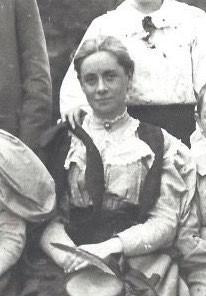
First, for context, I want to take us back to 1889. Louisa, at the time, is mother to 7 children: Franziska is 11; Marion is 10; Juliet is 9; Helene is 7,;Alick (Gustav) is 6; (Edward) Russell is 3; and Arnold (Francis) is 1. Caroline has not been born yet. This sounds overwhelming but remember she did have a cook, housemaid and Lizzy, the children’s nurse, to help.
Louisa’s school age children have been attending Lady Barn House school, run by her friend, Caroline Herford. The girls particularly have been doing very well in their studies and are close to the age at which they would go onto secondary education. Unfortunately, there is no secondary school option for girls. Louisa’s influential, and progressively minded friends in the community, are in a similar situation. They decide amongst themselves that their area of Manchester needs a school for girls from age 12 to 18, bridging the educational gap between Junior school and University.
Founders of Withington Girls’ School
- C.P. Scott – Editor of the Manchester Guardian for 57 years and credited with making the daily newspaper internationally recognized.
- Rachel Scott – A British women’s education reformer, based in Manchester, who organized and promoted equality for women.
- Dr. Adolphus William Ward – Principal of Owens College, Vice-Chancellor of the University of Manchester
- Henry Simon – an Engineer, the first Treasurer and early Director of the School’s practical affairs.
- Emily Simon – Henry’s wife and advocate for education. She gifted the school its playing fields as well as scholarships to the University of Manchester.
- Caroline Herford – first secretary, Head Mistress of Lady Barn House School, Biology teacher at WGS.
- Mrs Jane Louisa Lejeune – served as school secretary and was the longest serving of the Foundation Governors, from 1890 until her passing in 1936.
The Founding Committee Meeting
On Wednesday ,October 16 1989, C.P Scott with his wife Rachel, Dr. Aldophous Ward, Henry Simon and his wife Emily, Caroline Herford and Louisa Lejeune met to discuss the idea of starting such a school. Although this was considered the first official meeting about the school, it is easy to imagine that possibly the first discussions took place on a Sunday afternoon during an open house at the home of Louisa and Edward while the many children of the Scotts, Simons and Lejeune’s happily played.
Eleven weeks after the first meeting, money had been raised, premises acquired and a Headmistress appointed. That a small group of parents could expeditiously effect this testifies to their influential positions in the Manchester community.
The reason that the school came together so quickly is that all the founders were progressive forward thinkers and greatly valued education as a means of bettering themselves and the world around them. They valued education in their children as a way to train them to successfully tackle whatever challenges life would bring.
They wanted the school life to be interesting and a bit non-traditional. Even given this, they did not ignore the importance of the academic subjects as their goal was that their daughters could eventually go to University.
School Beliefs and Philosophy
The following is taken from Towards The Light: A Portrait Of Withington Girls’ School, Third Millennium Publishing, London
The founding families knew each other socially, had similar liberal views, and were in many ways ahead of their time. They were passionate advocates of education for women and wanted their daughters to have the same academic opportunities as boys had at public school.
Their initial advertisement for the school stated that they will make the work of the school interesting and stimulating in itself, rather than to depend on examinations and prizes. In addition to the more traditional subjects there would be a focus on manual training, outdoor games, natural sciences, wood working, and astronomy.
WGS recruited teachers with the highest possible academic qualifications and experience. The qualifications of the School’s teachers testify to its aim of achieving a high and varied academic standard.
Withington Girls School – Timeline
- 1889 October 6th – first meeting at Lady Barn House School to discuss the founding of a girls school for 12-18 year olds.
- 1890 – Founded and officially opened in April 1890 by the Lord Mayor of Manchester – Located in a leased house at 16 Mauldeth Road – opened with 4 students that April and then 16 students in September 1890.
- 1895 – 25 students
- 1897 – School moved to the leased Mosley Lodge across from the Mauldeth Road place that then became “The Boarding House”.
- 1902 – 43 students
- 1903 – 72 students – Mrs Simon purchased a nearby boys’ school, Woodlands, on Wellington Road. She leased it to the school and it had fields surrounding it for playing (initially shared with the local sheep).
- 1906 – the school bought the site and has over the years expanded on this location.
- 1909 – 51 students
- 1924 – Board of Education Inspectors conclude Withington is an excellent school delivering a good Secondary education for girls.
- 2025 100 year anniversary of Accreditation as an Independent School with the Board of Education – Founders Day April 28 2025 …….
It was a modest and slow start to the school. But year after year, with only a few exceptions during wartimes, the number of students increased and the school became more popular. The school grew out of their location not once but twice in their early years and ultimately took over a boys school, named Woodlands, on Wellington Road. Eventually, WGS developed a more standardized examination program in order to become accredited and recognized officially as a school from which girls could write the entrance exams for the big universities in the UK.
In 1924 it passed inspection and would thereafter be officially recognized as an Independent Accredited school.
Present Day Withington Girls School
At present day WGS has a Junior School, Senior school and a Sixth Form. Here is the January 2025 enrollment of students .
- Total students : 756
- Junior School – Year 3 (Age 7) to Year 6 (Age 10) – 163 students
- Secondary School – Year 7 (Age 11) to Year 10 (16) – 429 students
- Sixth Form – Preparation for A level examinations (University entrance exams) – Age 17 and 18 – 164 students.
And now I want to invite you to come with us on a trip to Withington Girls’ School in present day Manchester.
In September, 2024, a group of us travelled to Manchester. Francesca and Geoffrey from Brisbane, Australia, Dave and I from Victoria, BC, Canada and Derek and Sharon from Bridge Lake, BC, Canada, and then Lea from Atlanta, GA all converged on Manchester and made our way to Withington Girls’ School. So let’s go to the school for a tour so you can get a sense of what was an amazing experience for everyone.

This is the school as it is today. You can see the original building in the centre and how it has expanded from there in multiple additions. The fields are in the back and in the far right corner is a pond and natural area that is used almost daily for teaching.
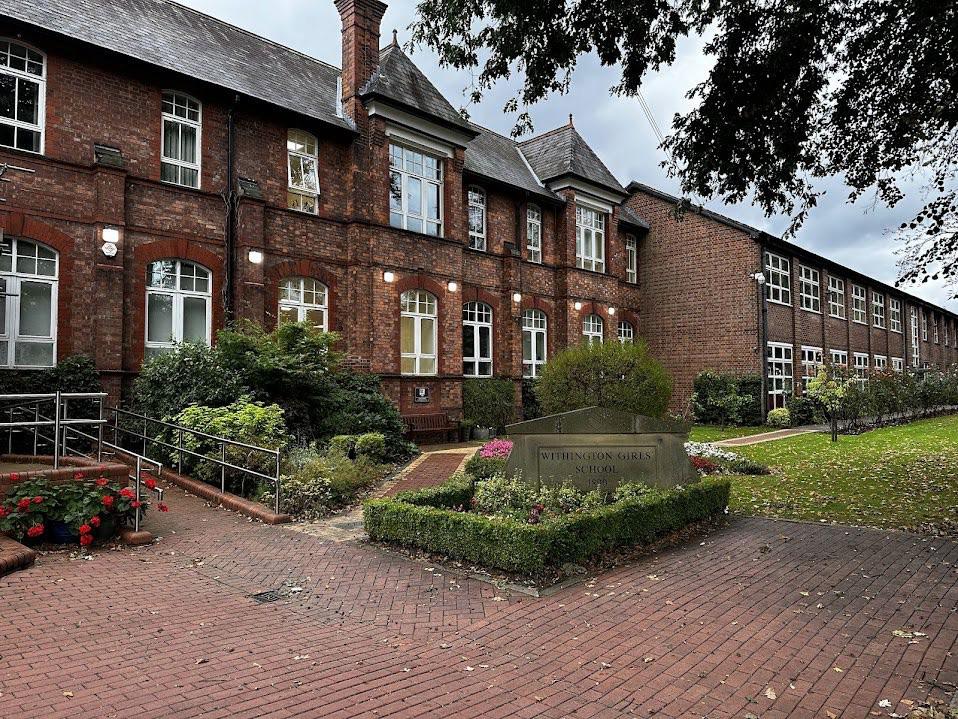
This is the front facade now.
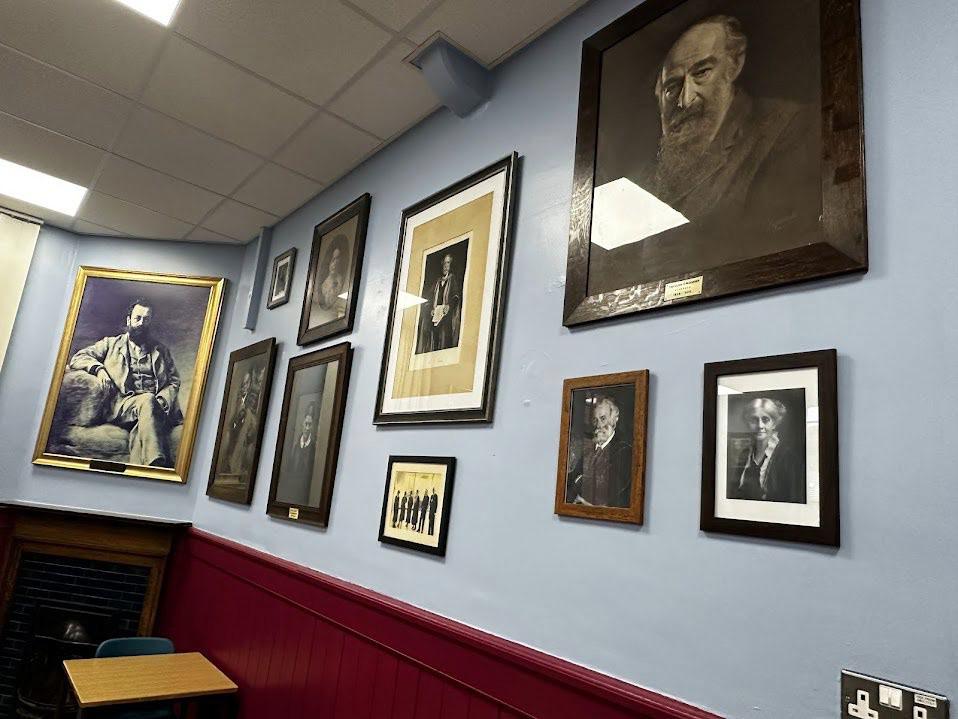
One of the first rooms we visited was the Founders room – a room in the main building dedicated to the four Founding families. It also shows the history of the school over the last 135 years. In this image you can see the photo of Louisa that we are all familiar with.
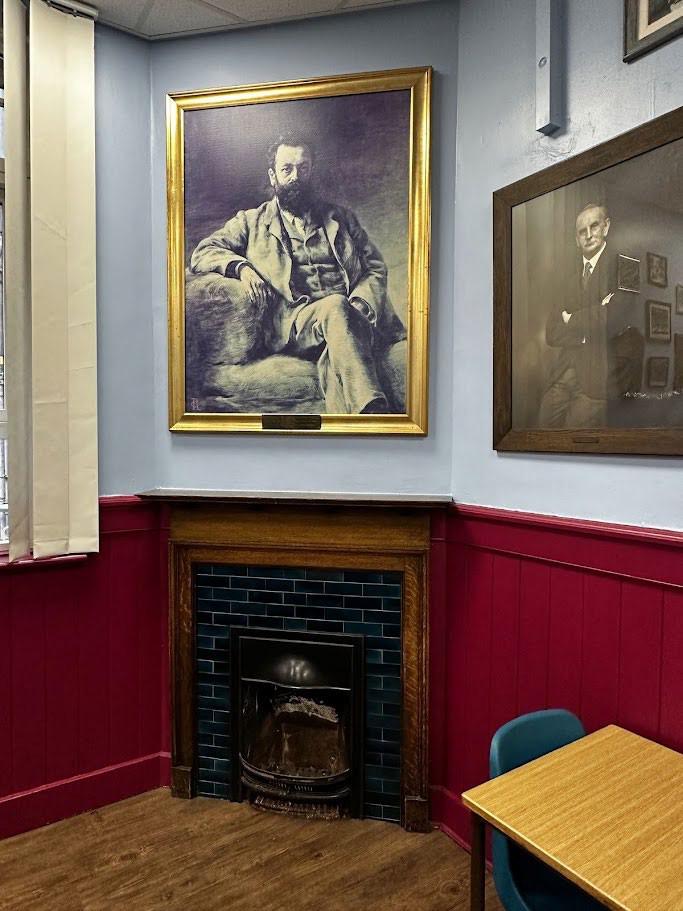
In this photo showing Henry Simon, you can see one of the original coal burning fireplaces.

There were numerous interesting photos’, plaques and artifacts in this room.
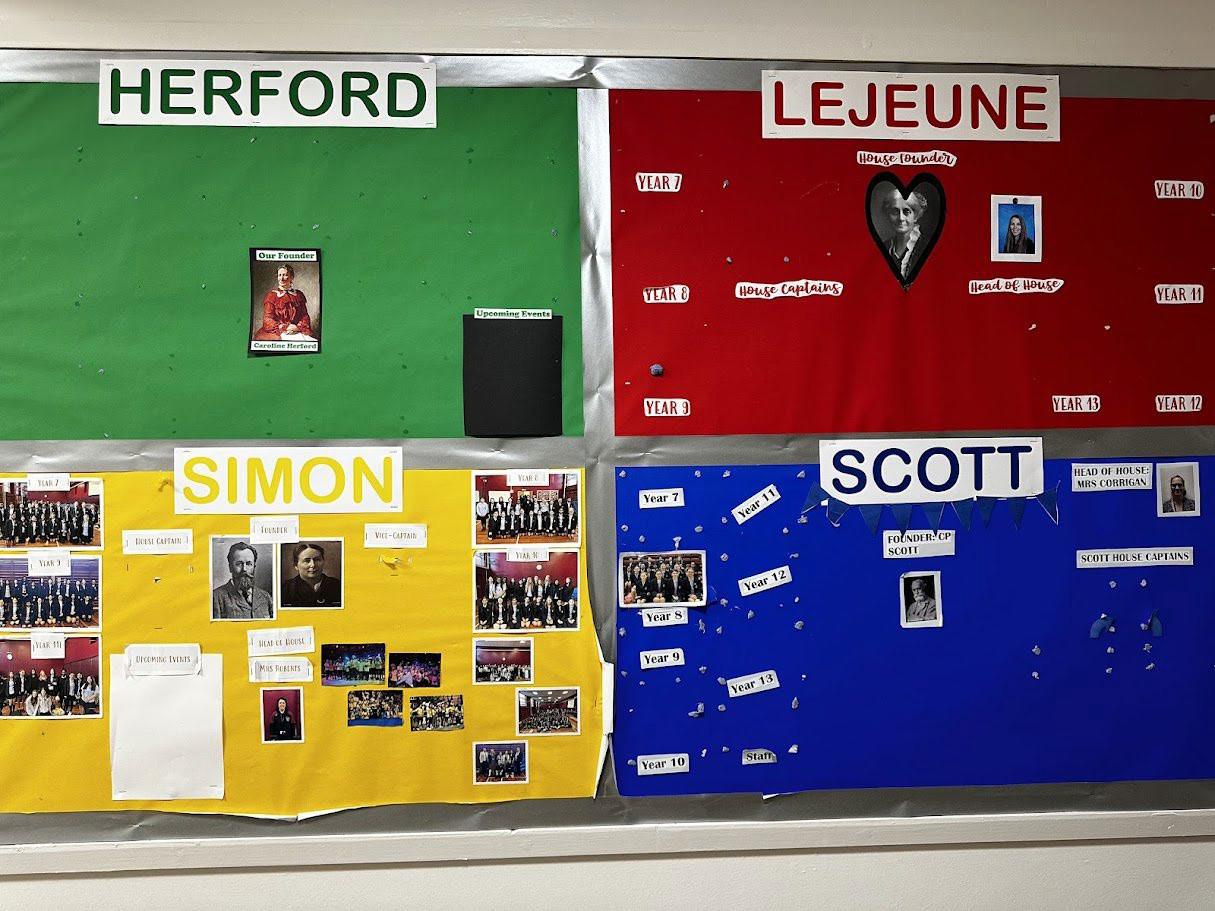
We then started moving around the school. One of the most fun things we found out is that the school separates the girls from each year into groups or Houses. The Houses are named after the Founders: Lejeune House, Scott House, Simon House and Herford House. The girls are awarded points based on their behaviour, academics etc that benefit their House over all.
The displays for the Houses look a bit sparse because we visited right at the start of the academic year.
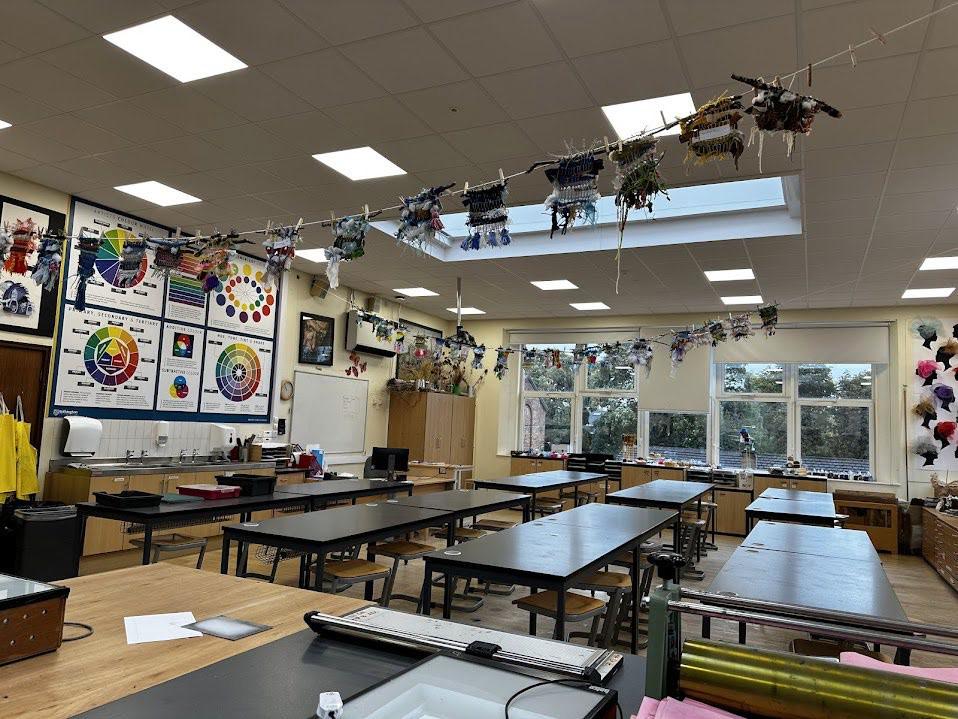
This is their amazing art room.
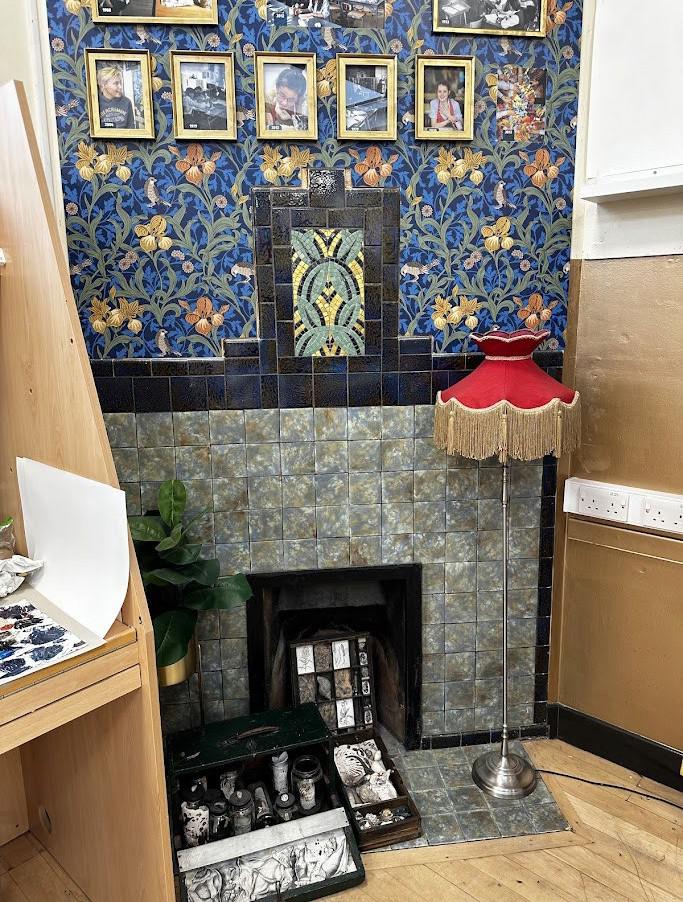
The Art Room is also in the ‘old part’ of the school. Another original fireplace – Art Nouveau style and coal burning.
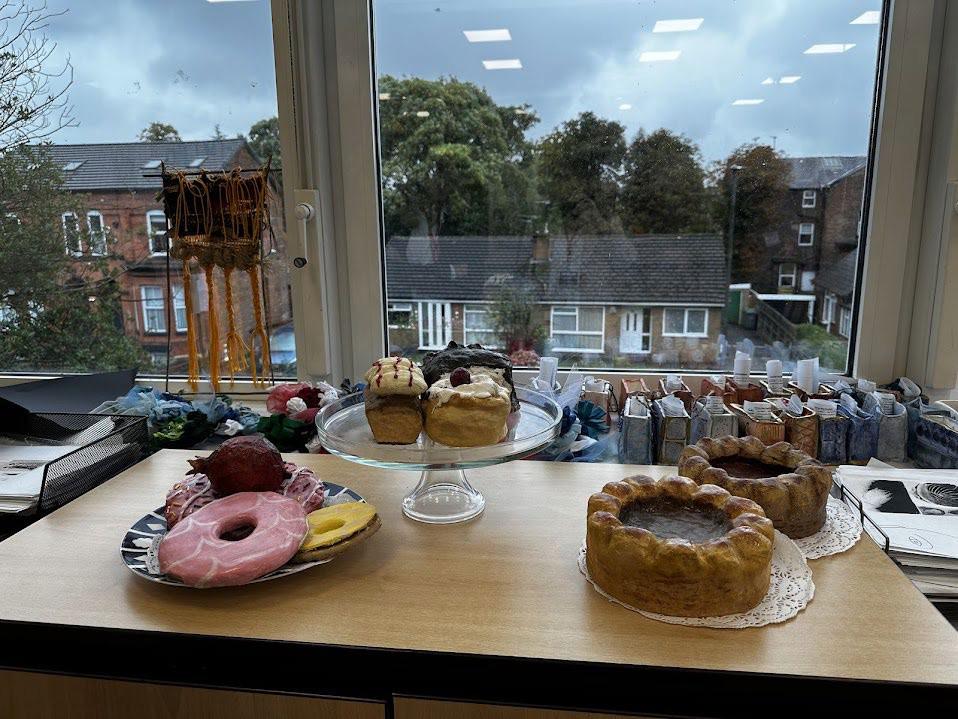
Some of their fabulous creations.

More interesting creations.
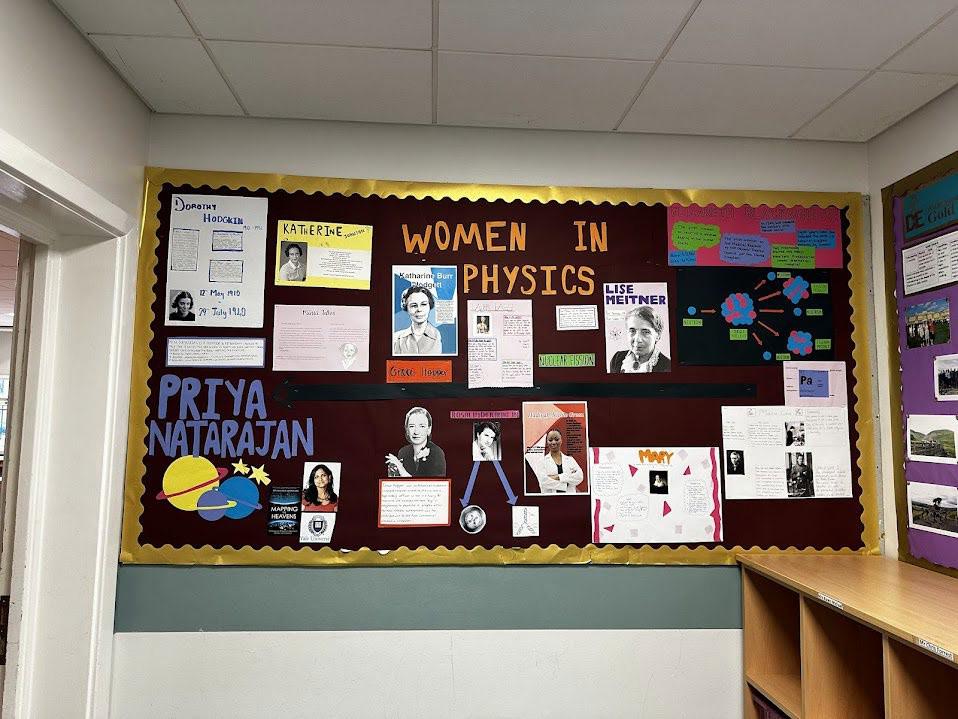
One of the very inspiring things I noticed about the school is the way they emphasize accomplishments of notable women from around the world, both present day and historically. Additionally, they have so many very accomplished alumni and past students that continue to visit the school and give back by presenting information to the student’s about their experiences and knowledge.
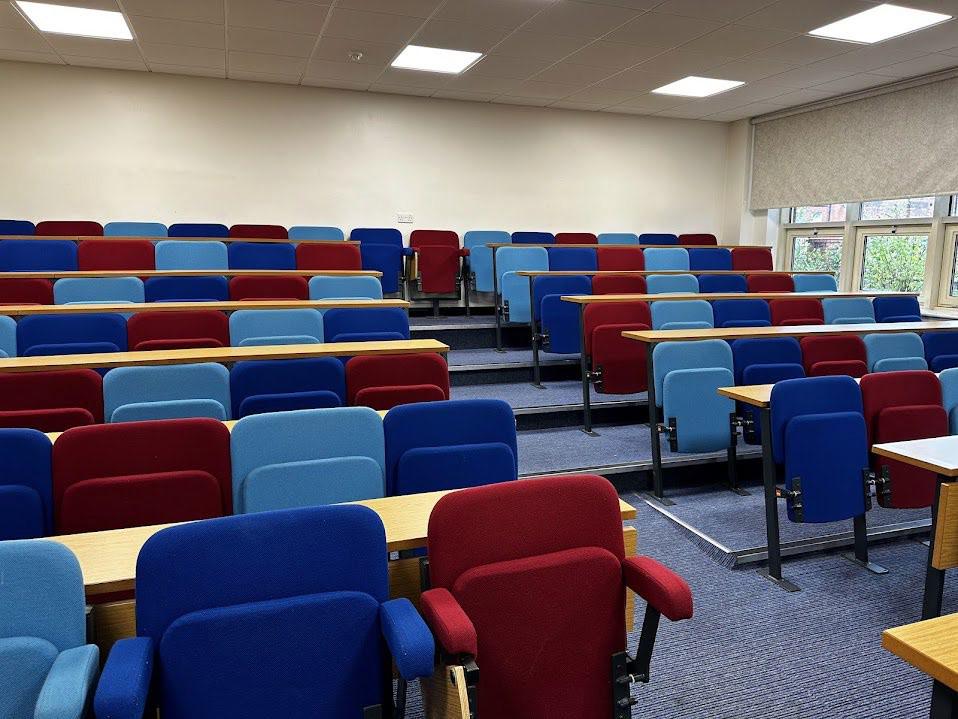
A typical learning room.

To say I was blown away by this science room is an understatement. This is the most well designed and comprehensive chemistry and science lab that I have ever seen.
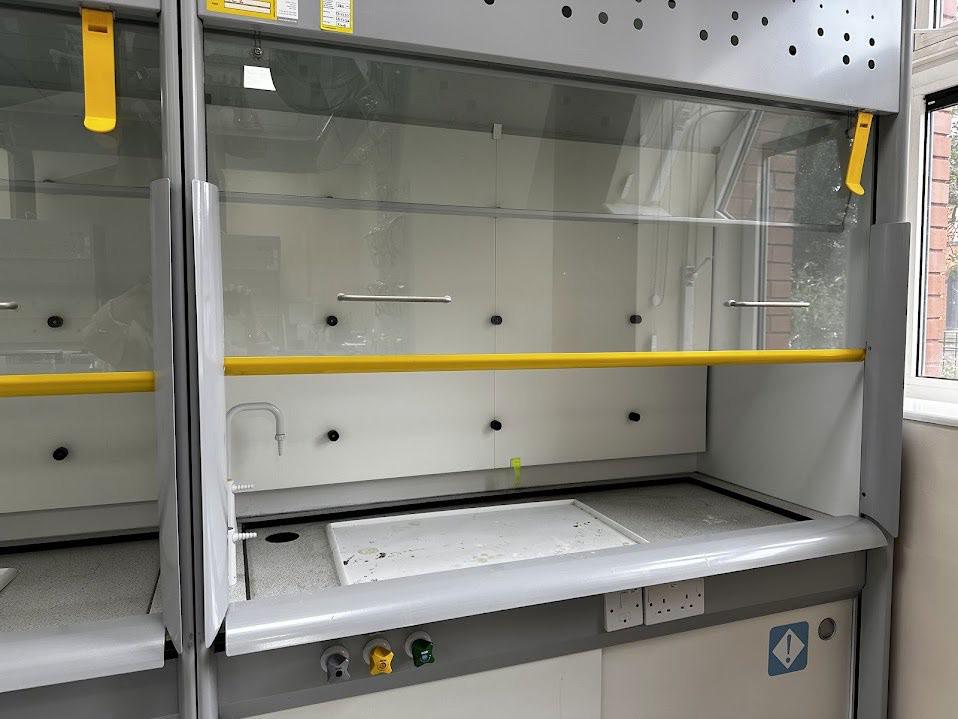
Fume hood in the science lab.
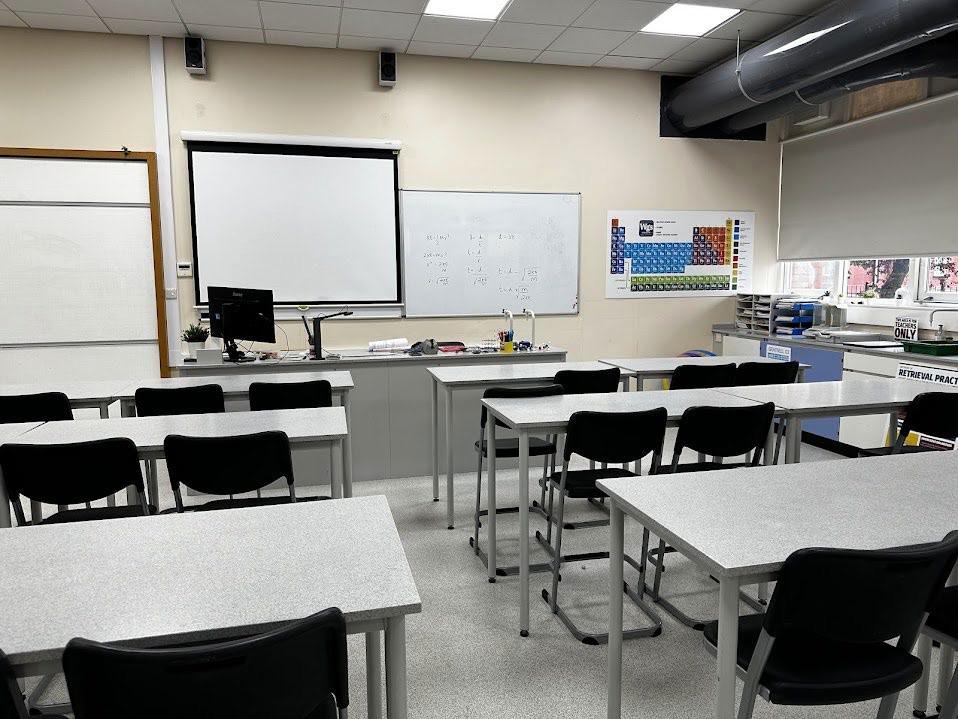
Learning area in the science lab.
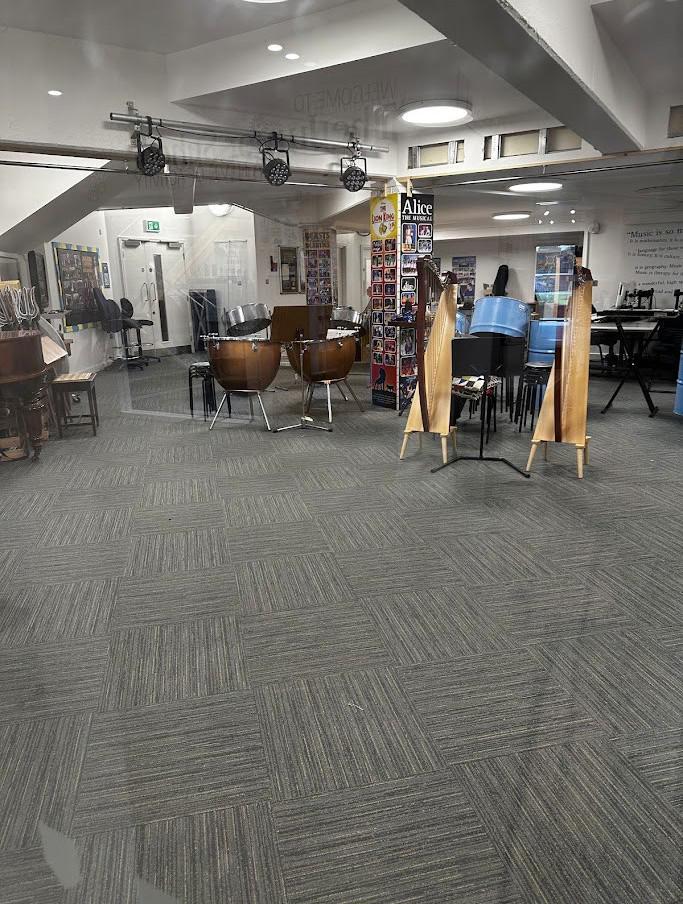
Another area they excel in is music education.
Notably, Withington Girls’ School has the largest harp department in the country. Students from all levels, including the Junior School, learn to play the harp. They have over 20 harps in the school to learn on and 5 electric harps.
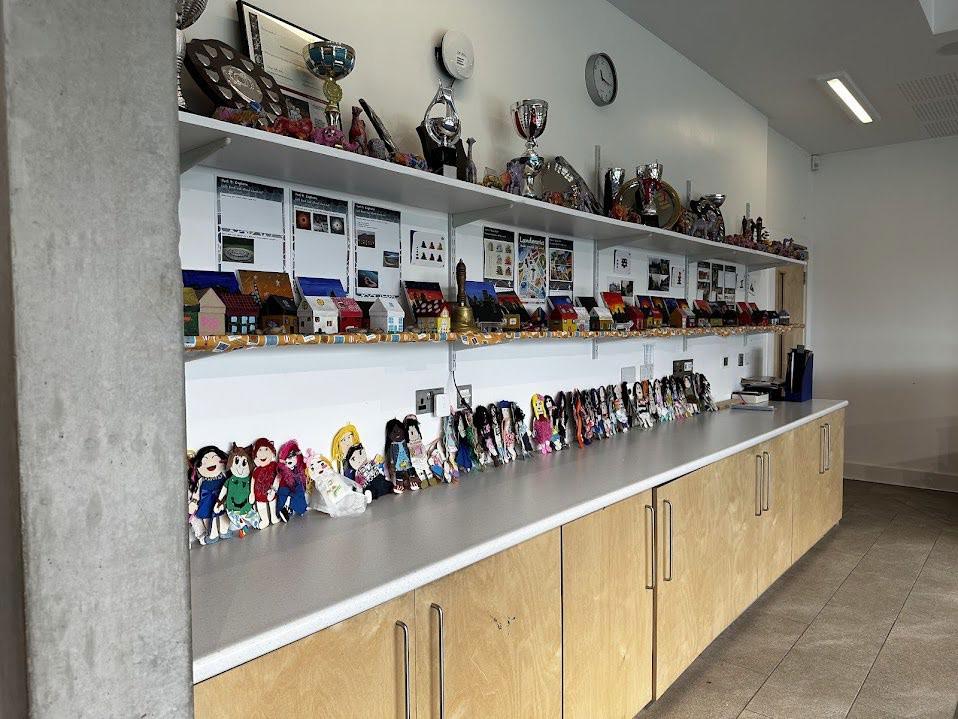
This and the following give a quick peek into the Junior School.
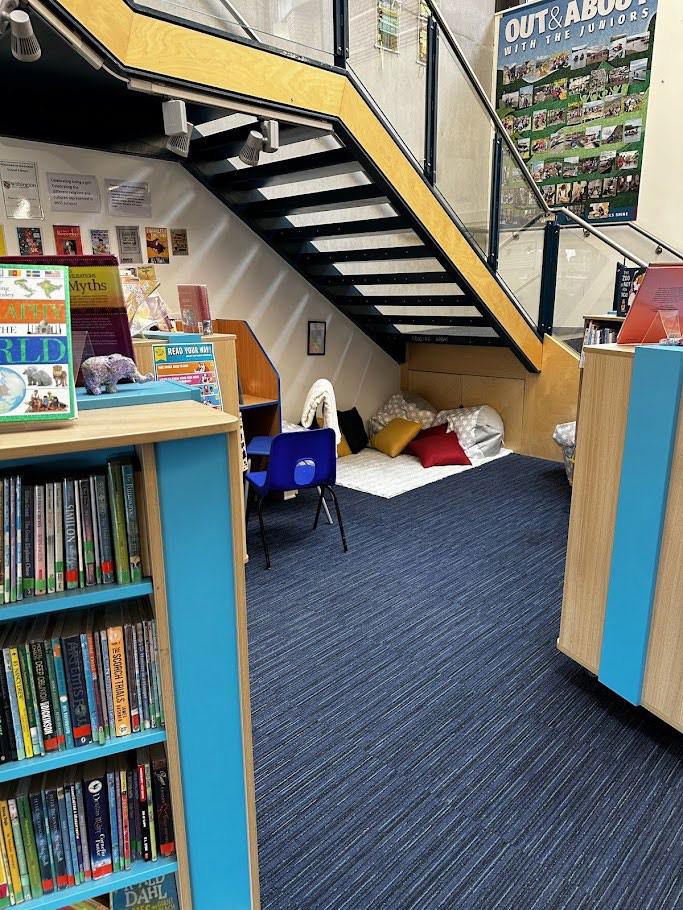
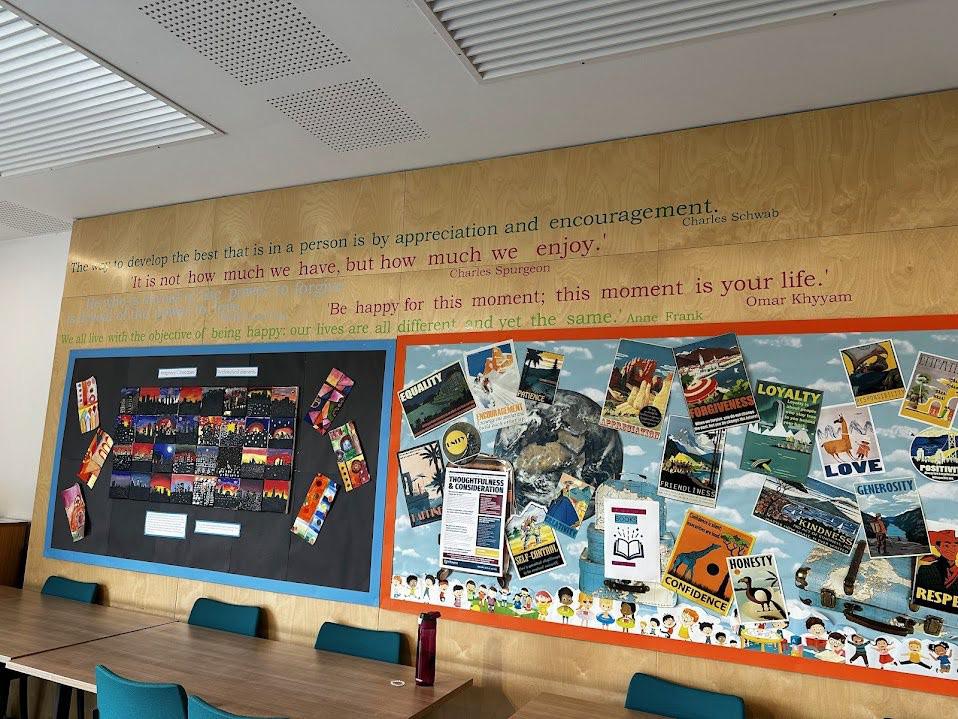
Another quick look in the junior school. We couldn’t show any of the classrooms to maintain student privacy.
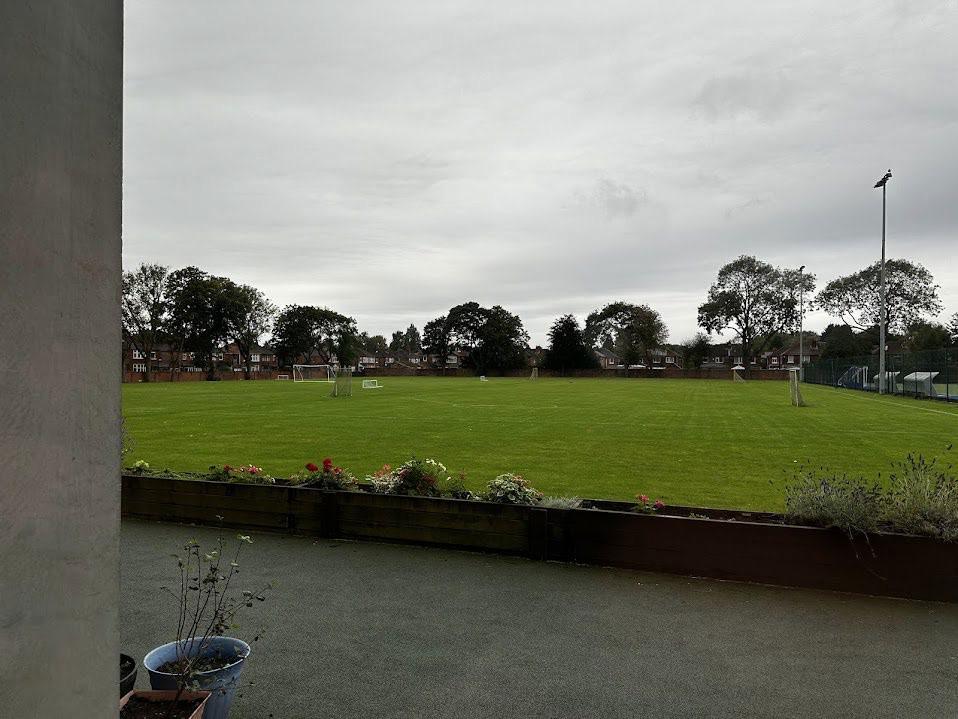
Another look at the fields that were donated to the school by the Simons.
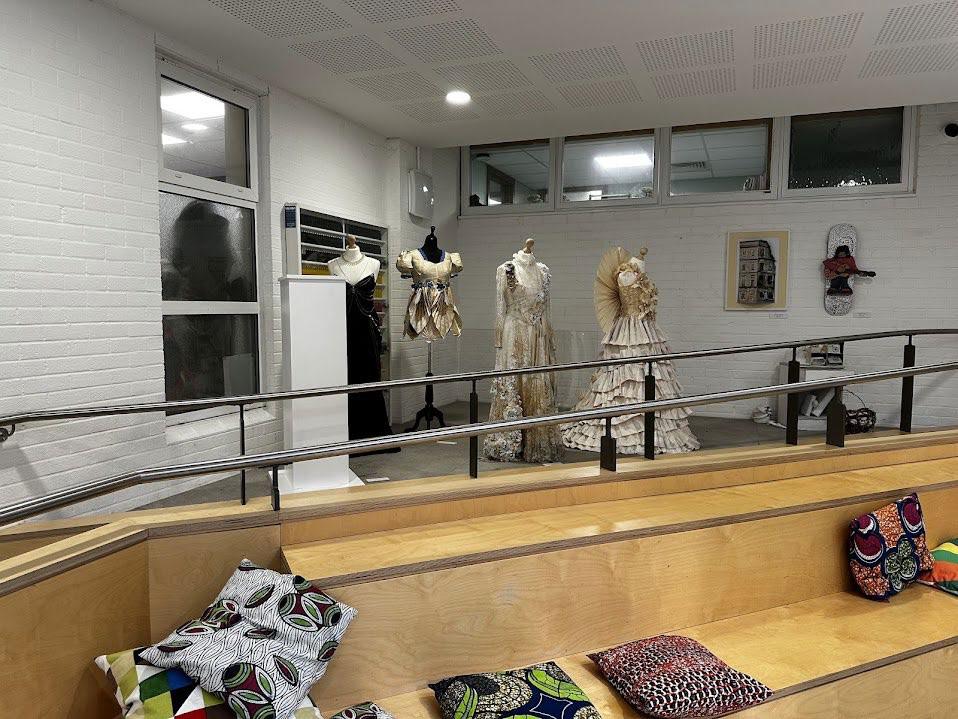
One of the more interesting areas of the school is this octagonal vestibule just outside of the auditorium. It has benches with pillows, artwork and displays of student creations. Note these amazing paper dresses.
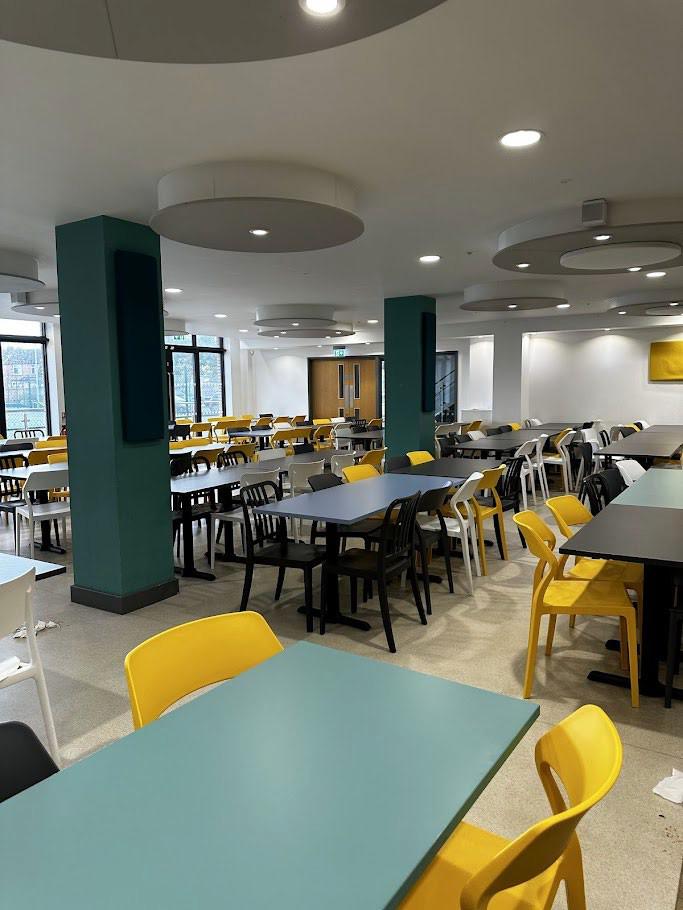
In 2022, a new dining room with a conference area above was built for the school.
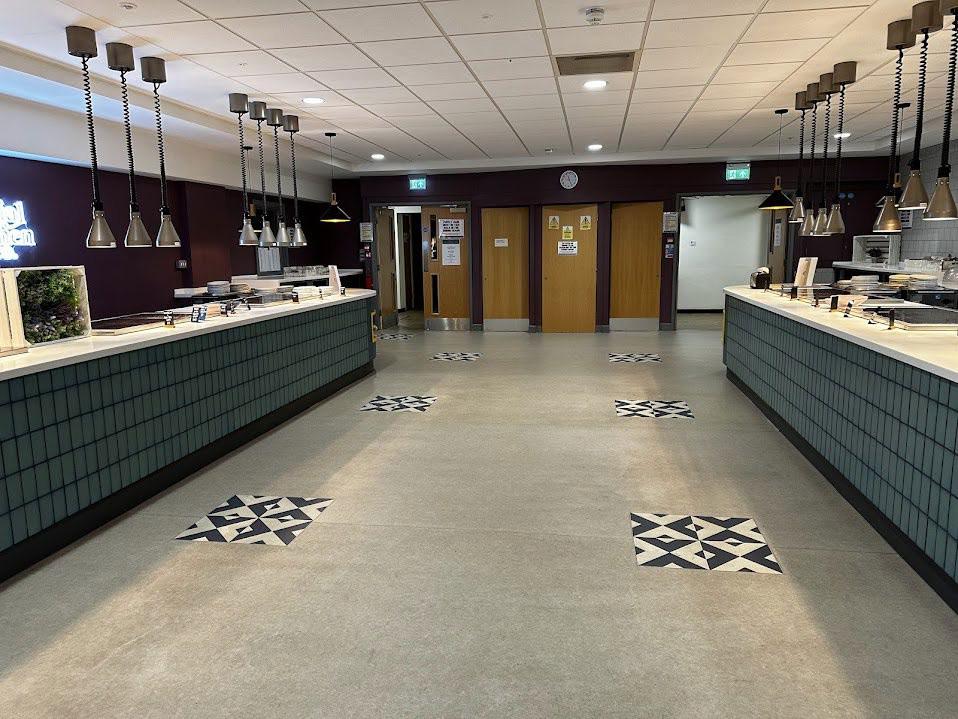
Unfortunately we weren’t invited for lunch!
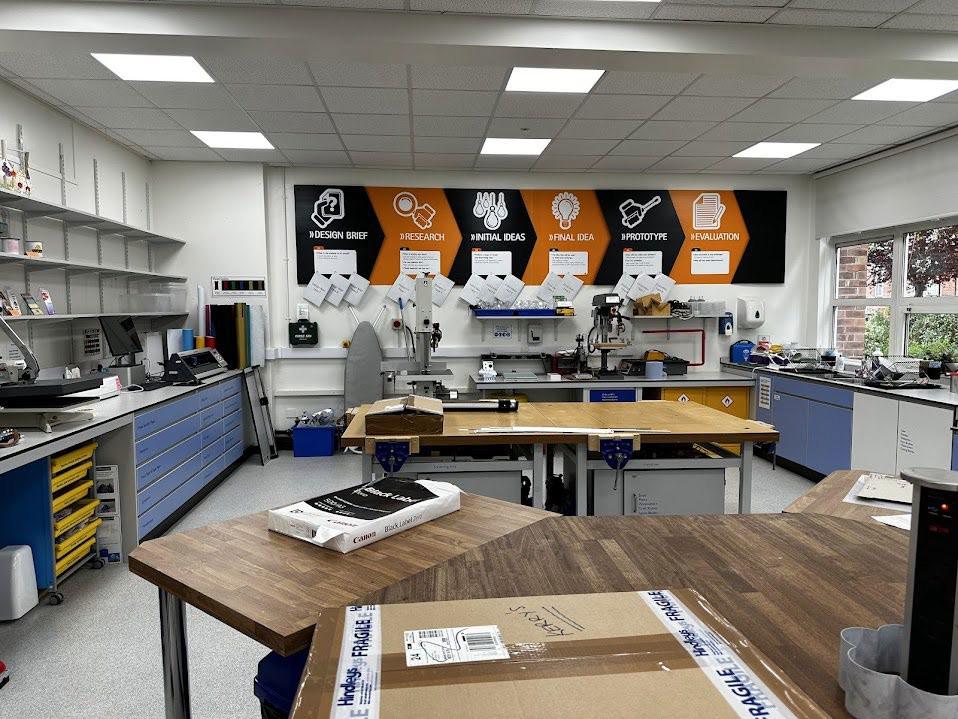
They are very progressive in their training. This is the area they teach design, CAD, marketing and 3 D printing.

And their Culinary arts room
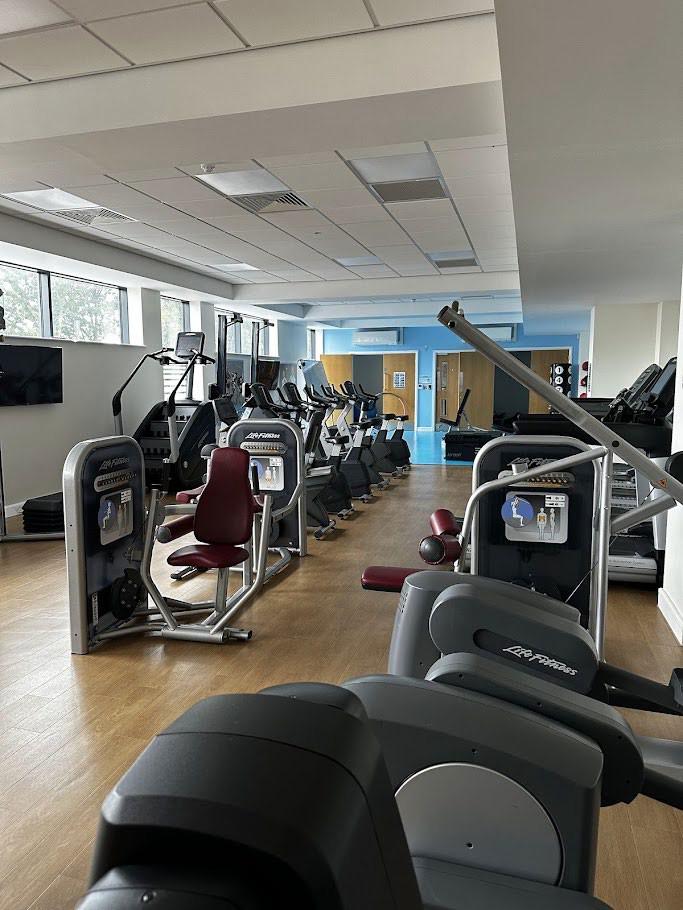

Despite being a small school, WGS has achieved national levels in netball, field hockey, lacrosse and tennis.
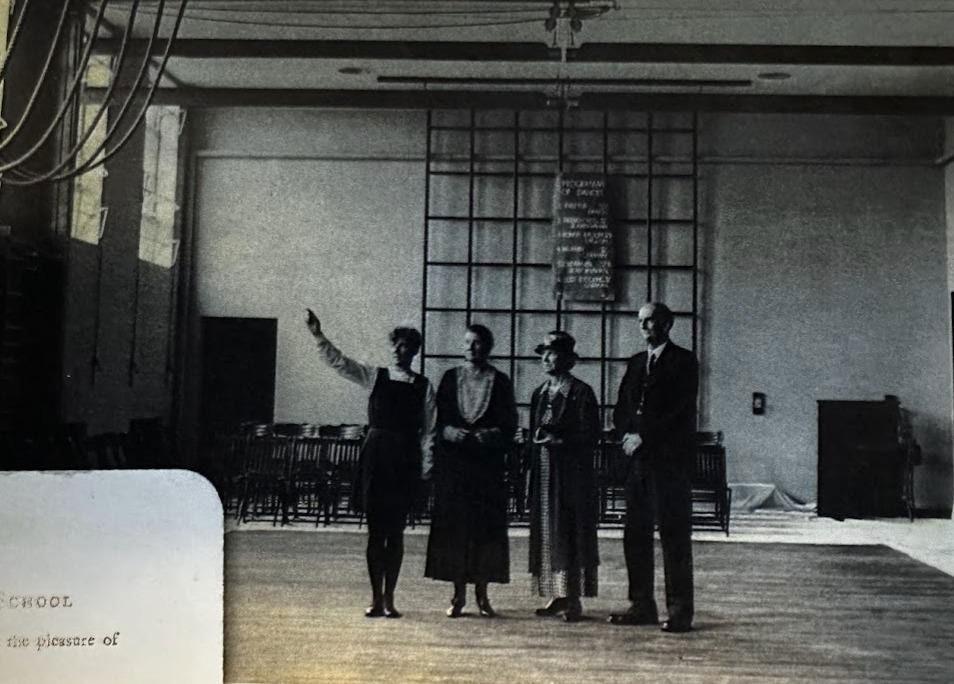
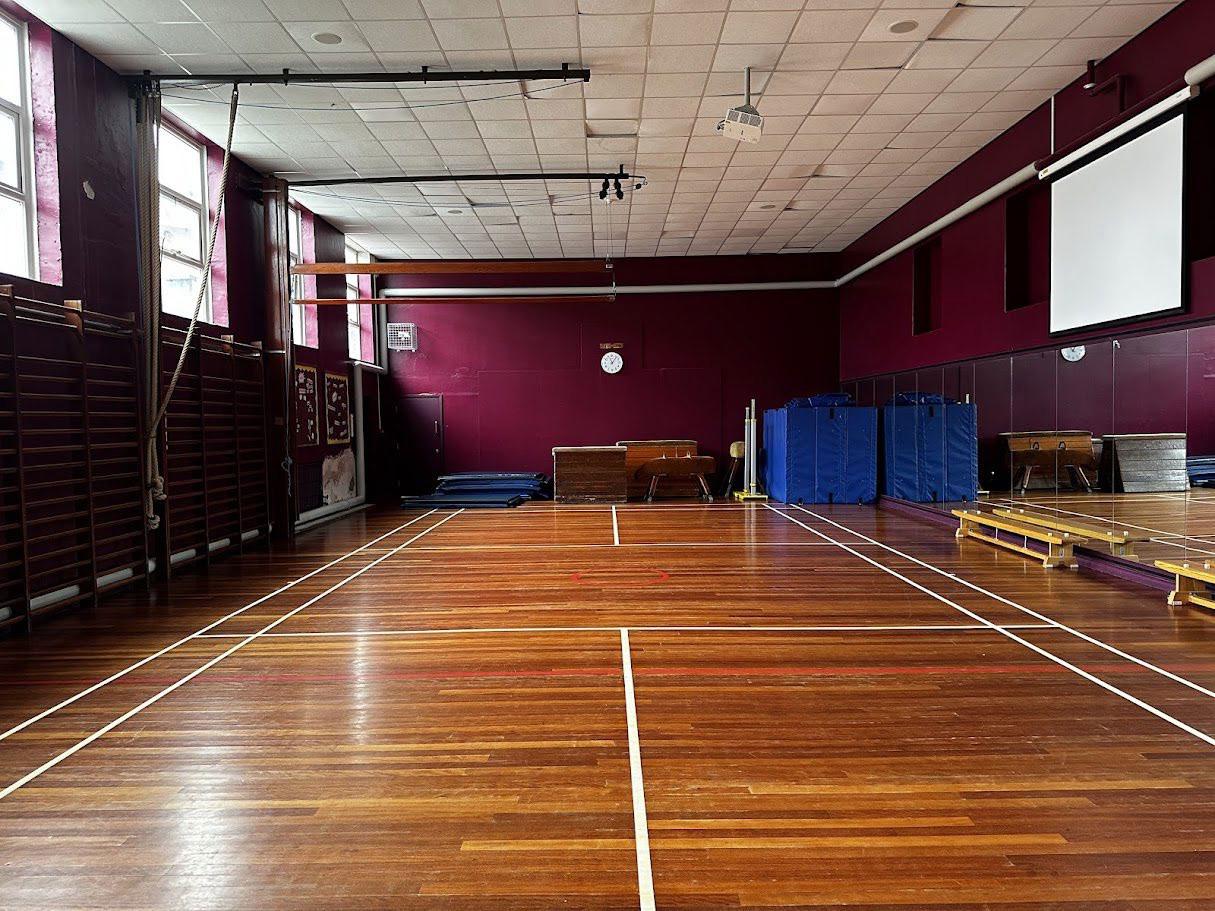
Ruth (Enke) Chambers
- Attended Withington Girls’ School from December 1919 to April 1921
- Was in Manchester to visit family after the end of WWI
- She was only 9 years of age but was allowed to attend
- In her autobiography she says about her time here at Withington Girls’ School “I’m still grateful for my spell at that school, the best school I would attend.”
Besides the four Lejeune girls and two Enke girls, my grandmother Ruth Enke Chambers attended WGS from December 1919 to April 1921. Of note was the fact she was only 9 years old at the time but was allowed to be enrolled in the school, possibly due to her height and intelligence, or since she was living with her Grandmother Louisa at the time.
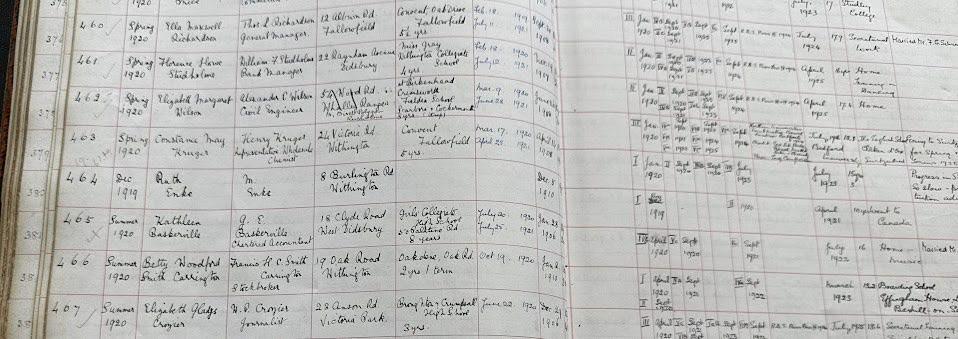
This is the ledger that recorded the students as they entered and left the school and here you can see Granny Ruth’s information.
So the last bit I would like to share is a small part of the Assembly that we took part in at the school. We were invited to speak to the sixth form group and share some information about Louisa Lejeune and how her legacy has directly and indirectly affected our family.
Want to see More?
- http://www.WGS.org
- https://www.facebook.com/withingtongirlsschool
- https://www.instagram.com/withingtongirlsschool/
- Alumni magazine – you can request to receive digital copies of their annual Alumni magazine
- Link for the full video of our presentations: https://vimeo.com/1035533840/a788600fbb?share=copy
 The Marion Project - A Family History