
Note: This page is being constructed on line rather than built off line and then imported. As a result it will be undergoing continual change including new sections, new images, editing early entries etc. It uses, as sources. my own memories, excerpts from my mother’s diaries of the time, Russell’s memories, old newspaper clippings and so forth. Enjoy the ride!
Derek Chambers
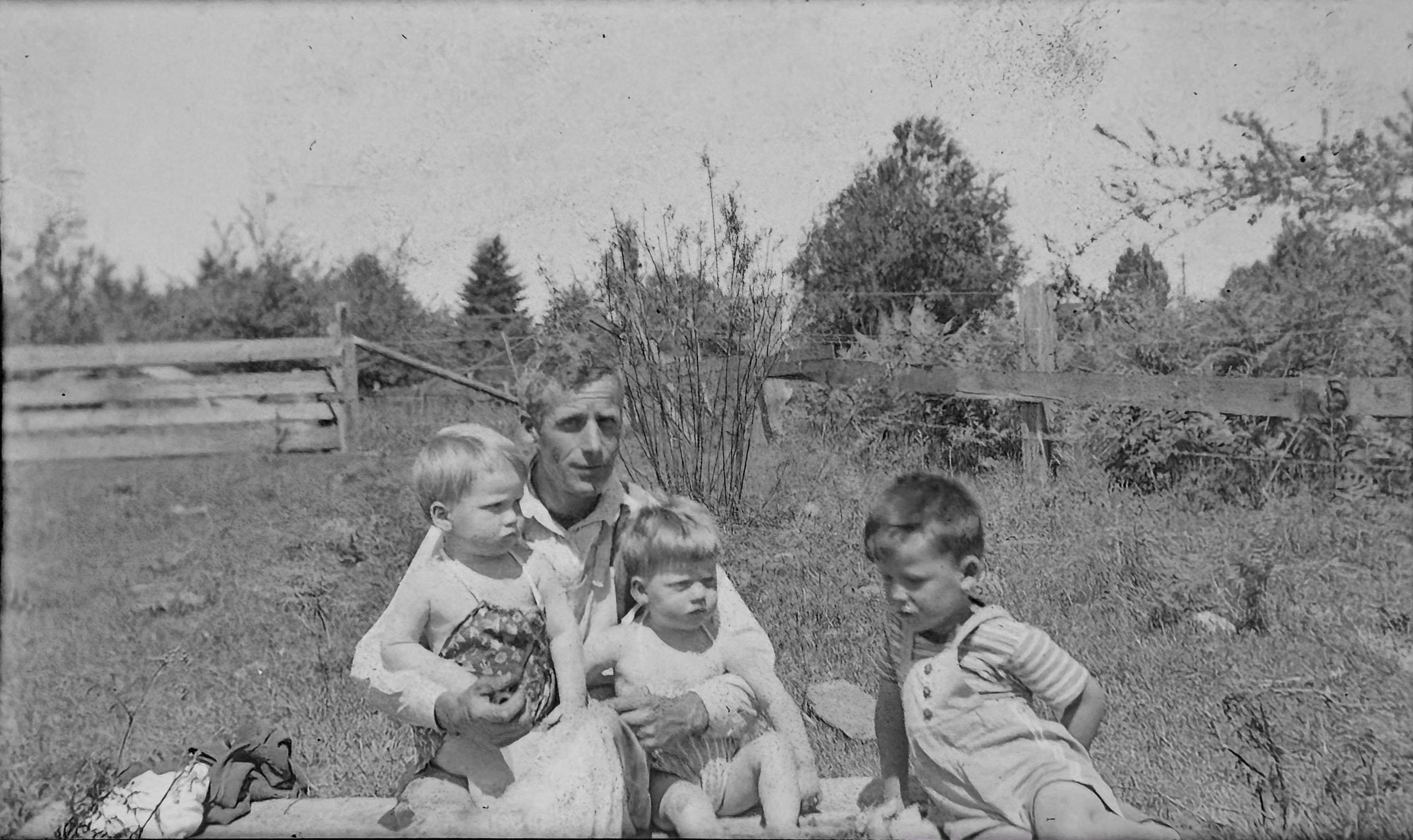
It wasn’t until much later in life, seeing how conditions of child rearing have changed that I realized what an idyllic childhood we had, those of us born in the 1930s and 1940s. My friends and acquaintances of a similar age, depending on where they grew up, mostly agree. That way of life, which granted us such freedom in our childhood adventures, is now gone forever so I think it important to try to describe how wonderful it was for children in circumstances similar to mine and my siblings. And basic arithmetic suggests I do this now and not delay much longer.
My parents were Lawrence Eldon Chambers and Ruth Enke Chambers. Pages elsewhere on this Project Marion website are dedicated to them and their life’s facts do not have to be repeated here except to set the context. They met at mutual friends at Cobble Hill on Vancouver Island in the mid 1930s, were married in 1937, moved to Ladysmith in 1938, staying first with Lawrence’s father and then, after purchasing the property next door in 1938 (with the financial help of my grandmother Marion Enke) moved into it. That was to become our childhood home until 1952 when we moved to Victoria.
The Ladysmith propery was located on 4th Ave and cradled the 4th Ave Extension on the latter’s south side. Its boundary ran for a way along what was then called Victoria Crescent (obviously, before a bypass was built, it must have been on the route to Victoria). The property line then turned west, ran to the edge of the drop off to Holland creek, turned north along the edge, and finally turned east to meet 4th Ave just before it turned along the extension.
<sketch map>
The Ladysmith House

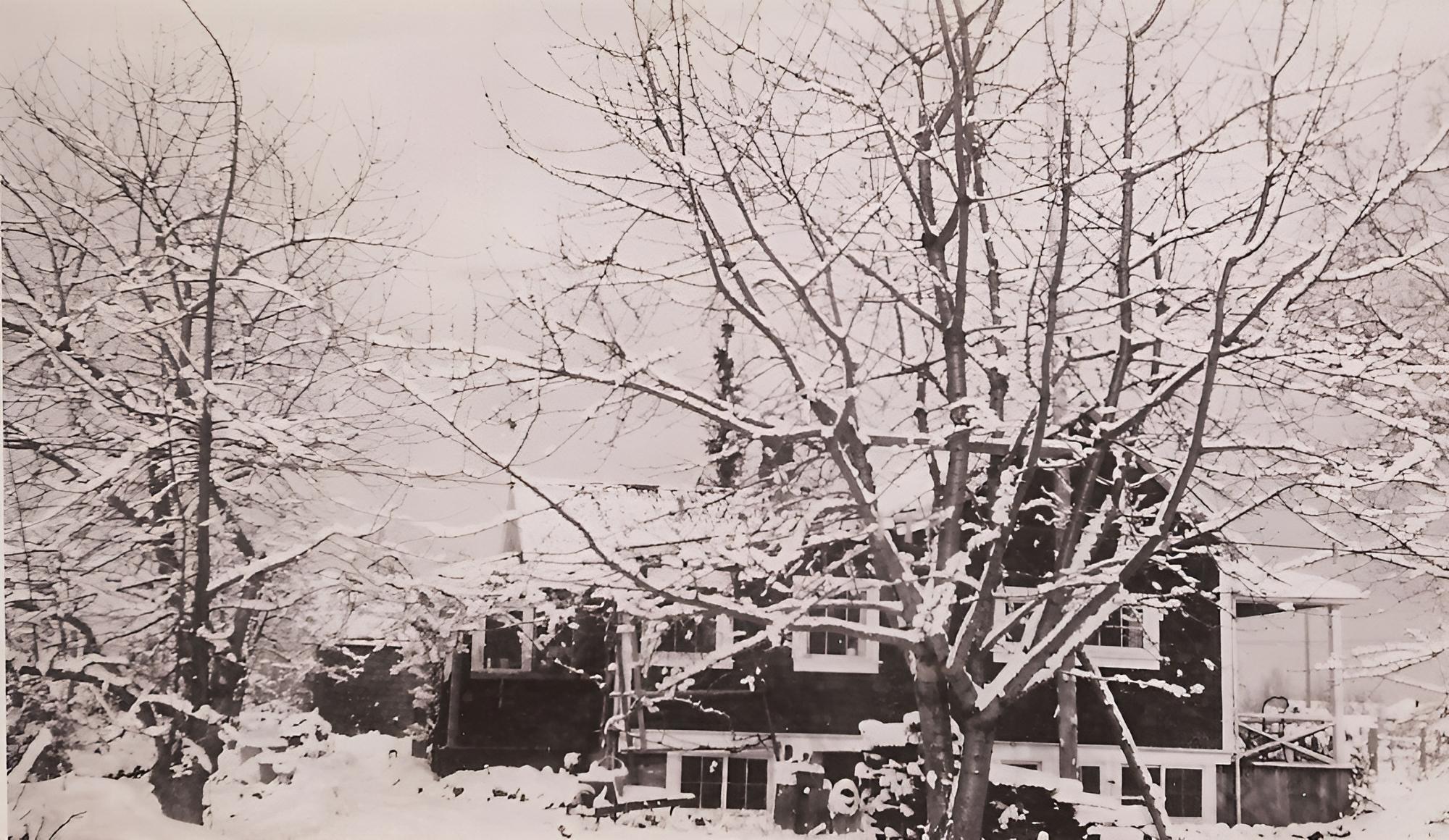
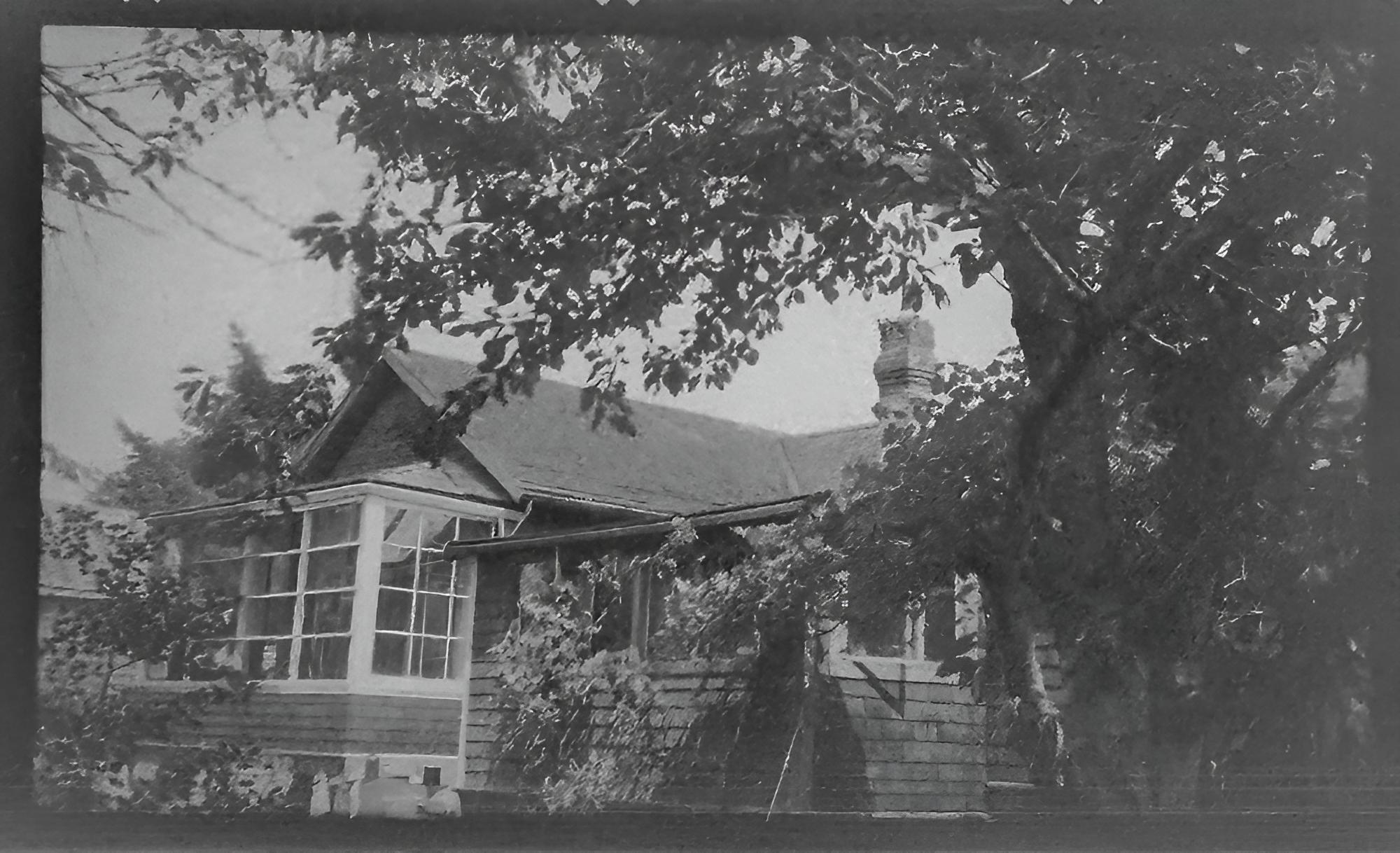
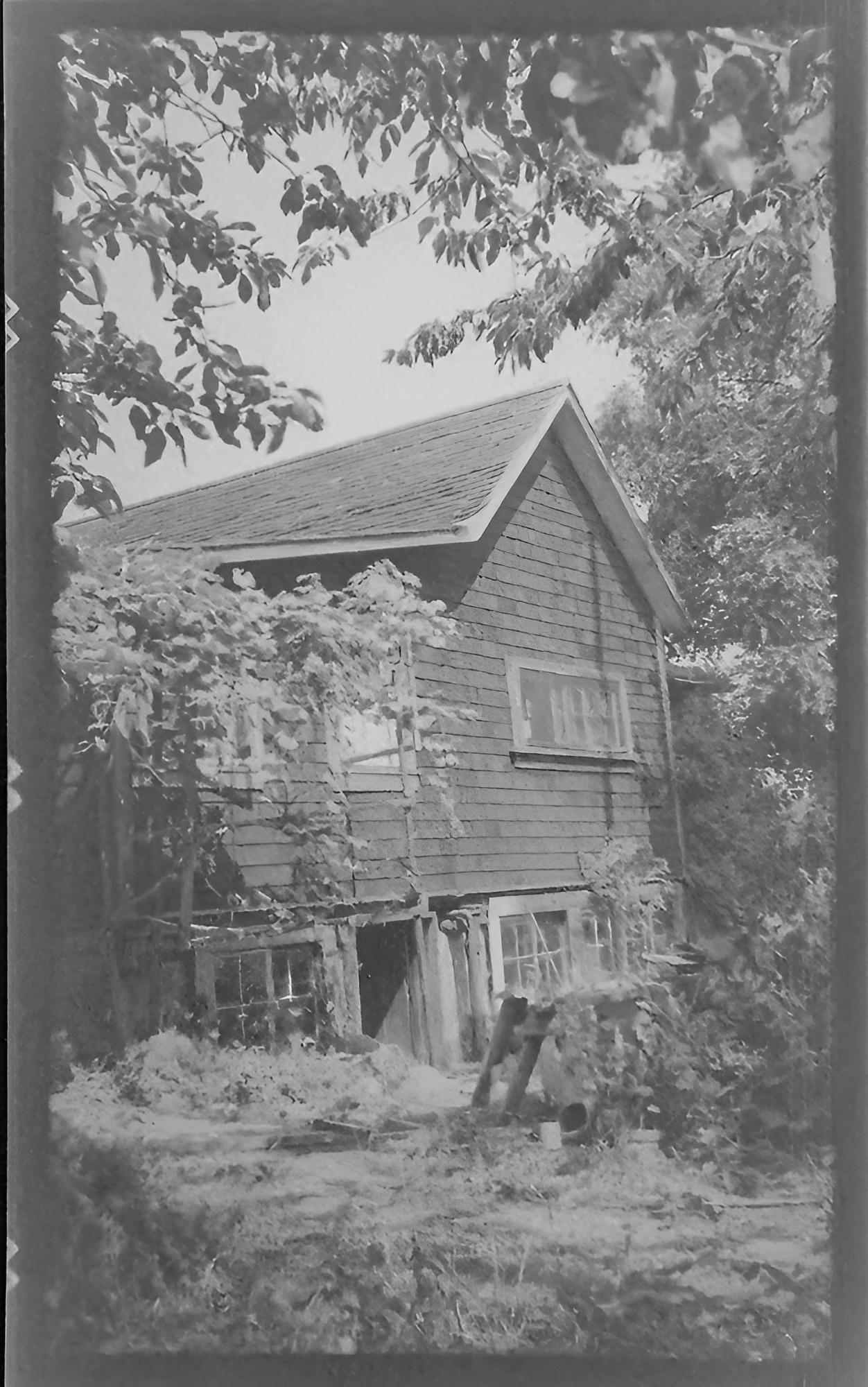
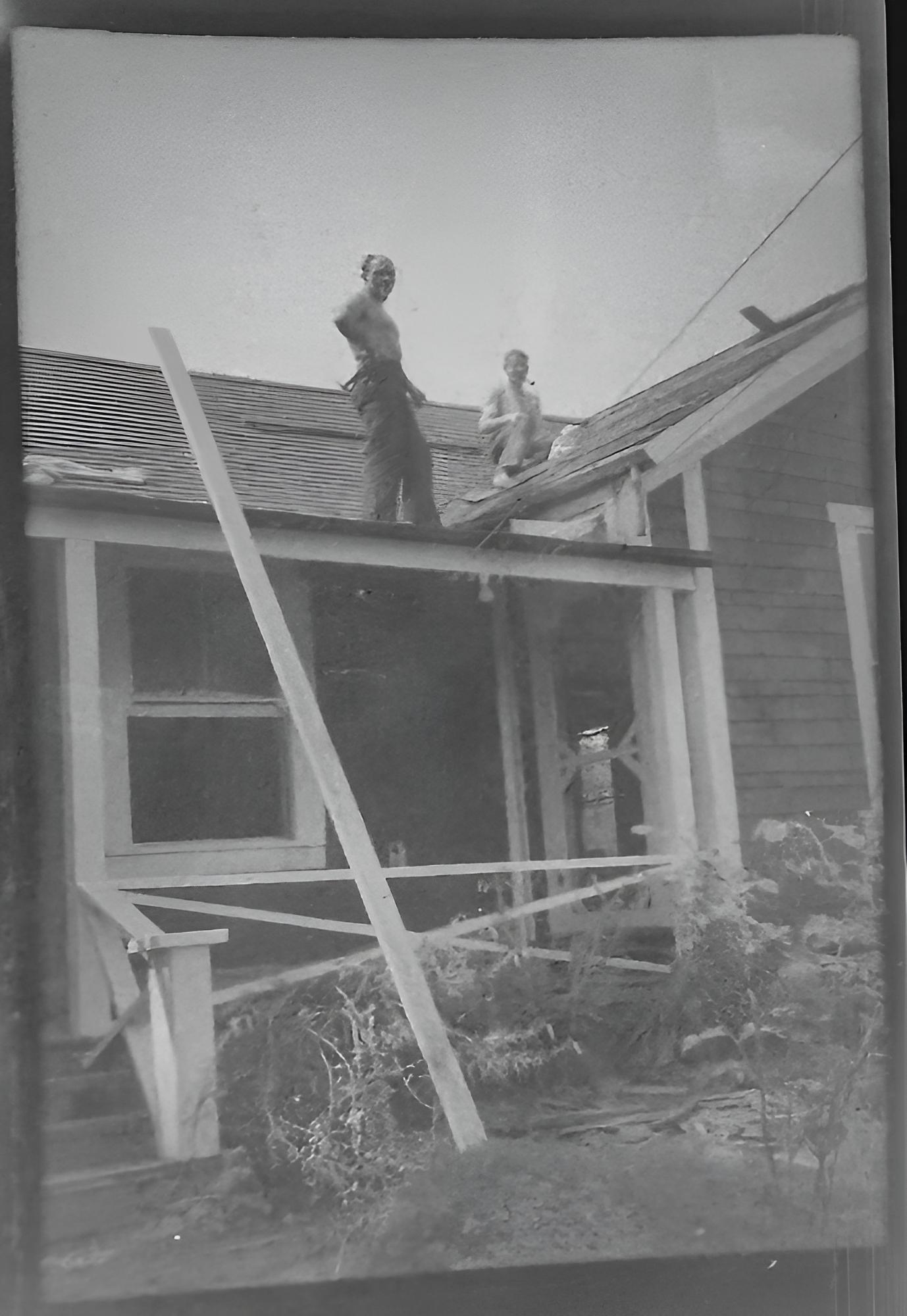
While I have many childhood memory snippets of bits of the property, its dimensions are exaggerated, based as they are on my small size at the time. As well, before I came on the scene, my mother and father had cleared a lot of the brush and trees. Consequently I look at childhood pictures of my brother Russell, older by just over three years, working with my father, and find the scenery unfamiliar.
At some point the family home and outbuildings (barn, garage, chicken house, pigpen etc) were cleared and a condominium complex now occupies our old property and that of my paternal grandfather.

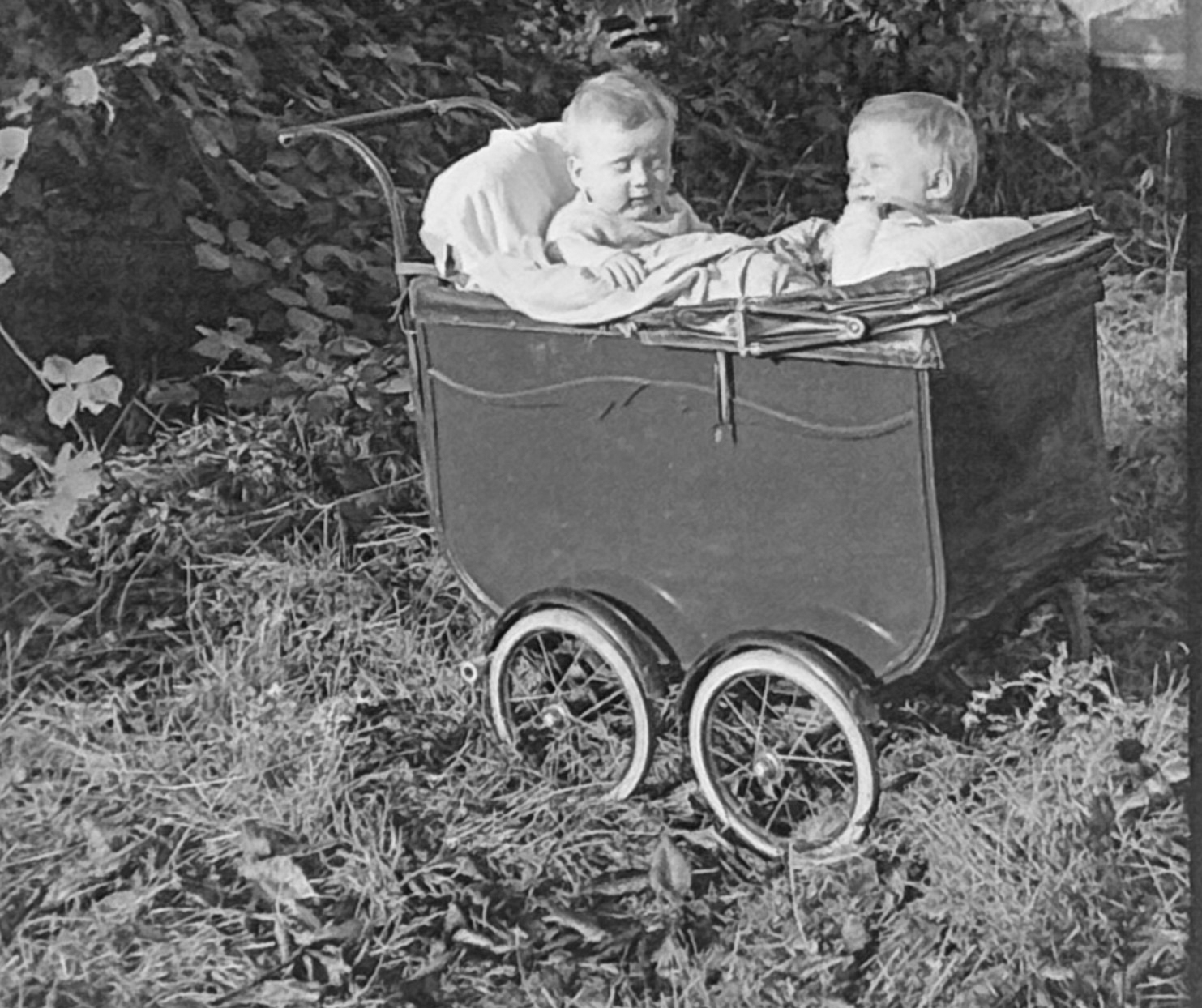
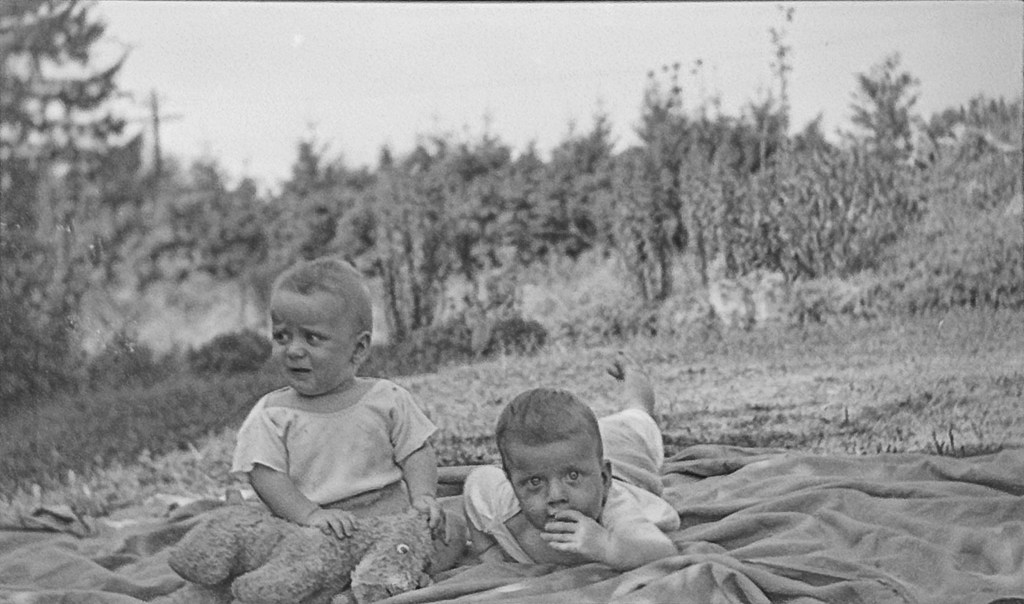
Russell was born in November, 1938, in Victoria’s Royal Jubilee Hospital. But my twin brother Bruce and I, born in January 1942, were delivered at the small village hospital in Ladysmith. Here’s what my mother Ruth wrote in a letter to her mother Marion who was in Bozeman, Montana following the December birth of her second grandchild Max Sieben Enke (later Baucus):
Sunday Evening
Darling Mother – Thanks so much for phoning – Am so proud of myself I’m fit to burst – not a bit disappointed [she was hoping for Judith Marion – instead unexpected twin boys!] – And although weary today, feeling full of life – Delighted with the hospital – Hannington did alright as it was a longish business – 6 hours pretty grim work – Will write you a really funny account soon – very different.
Have gone into a semi-private as I am the only person now and no prospects for another two weeks – and they never put me into the same room unless necessary – Am staying in 16 days – there’s no extra charge for twins – the hospital is thrilled.
The first twin [Derek] was 6lb/8 oz – born at 5 pm – the second [Bruce] 6 lb/2 3/4 oz born in a caul at 25 to 8 – Hannington thought it was the after birth!!! An hour’s suspense till it started coming down –
Don’t worry about me in the slightest – Simply tickled pink and L [Lawrence] doesn’t know whether he is coming or going!! Love Ruth

The Ladysmith of our youth was a small town, with just over 1700 people. While its origins near the end of the 19th Century were as a coal shipping port, its slow expansion brought in loggers, fishermen and miners, many of them immigrants from Europe. All of these people had survived the Depression, scraping by, finding new ways to make a few pennies. But, since all were challenged in the same way there was a strong sense of community, of helping each other, and organizing community activities for both children and adults.
We were very poor by today’s standards, but so were so many others. And the breadth of financial circumstances amongst the inhabitants of Ladysmith was much narrower than today. Tom Bertram, who owned and operated the town’s drugstore was probably more financially secure than others but the difference wasn’t seen as huge.

Holland Creek
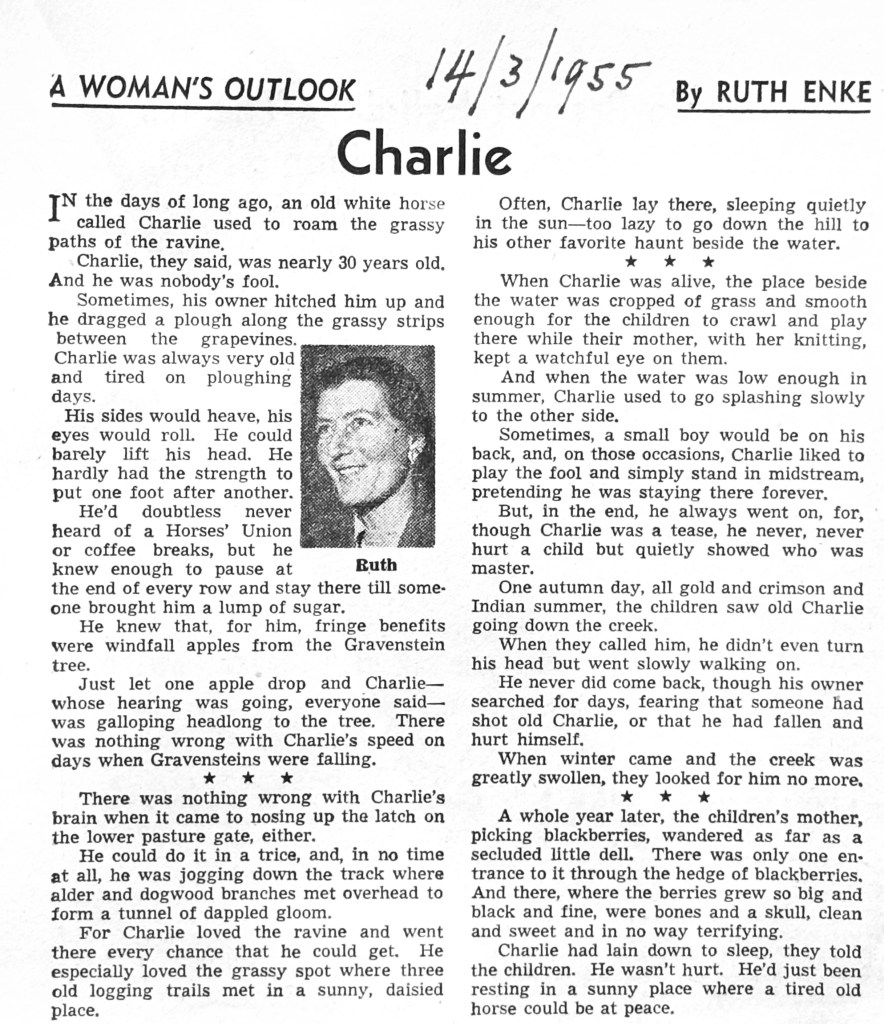
Behind our property’s west boundary the land fell away down a ravine through which Holland Creek ran on its way, via a tunnel under the Island Highway and Esquimalt and Northern Railway (E&N), to the sea. There were trails there then which have been further developed in the intervening eight decades – in our day the trails, lined in the summer by huckleberries, thimbleberries, salmon berries, devil’s club and other shrubs and bushes, were maintain by the browsing of an old retired white horse Charlie whose owner, our next door neighbour, had given it free access to the bush behind our collective properties.
As will be seen, the entire stretch of creek to which we had easy access figured large in our early childhood. My mother, who even as we were toddlers tried to make sure we got plenty of fresh air and exercise, would often walk us down to the creek whatever the season or weather. There we would play happily, poking around on its banks, playing in its sandy spots, or clambering out on the logs which, although grounded on the shore at one end, led tantalizingly out into the stream. This was not without its dangers of course. On one occasion, just after I had come out of hospital where I had had my tonsils removed, I fell off such a log and into the large pool it overhung. I distinctly remember a big salmon swimming past me as I went under.
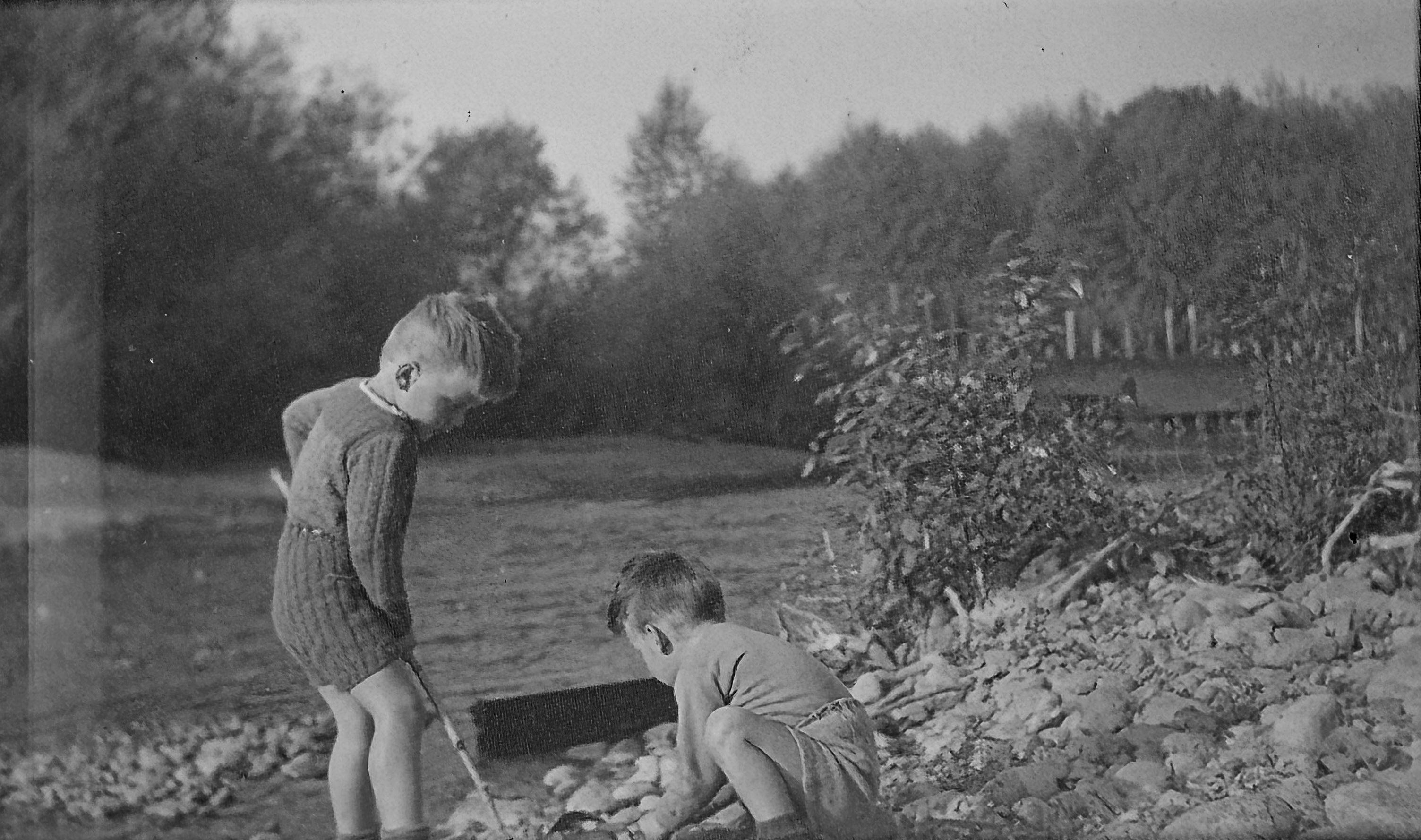
We learned all about salmon runs, salmon eggs and milt, and were quite accepting of the large number of salmon carcasses after spawning.
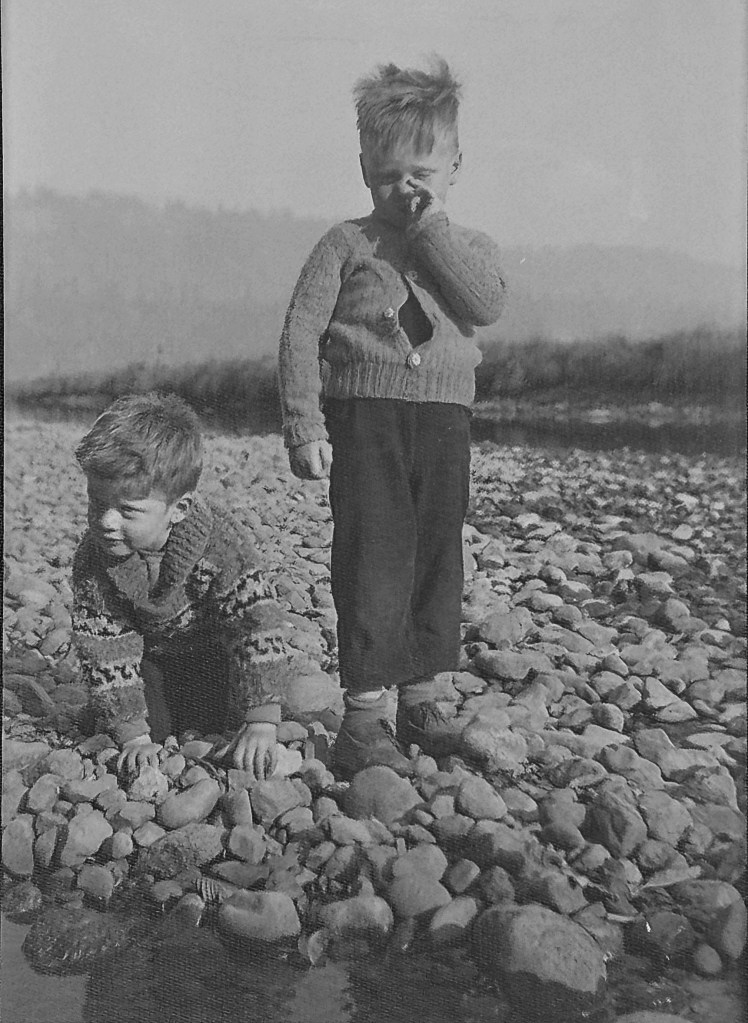
At its mouth where Holland Creek flowed into the sea was Tunnel Beach. There were often log booms anchored, awaiting their tug boat voyage to sawmills along the Fraser River on the mainland. When we were older and had learned to swim, we would often swim out to the booms and play around on them and under them. And when we were younger Tunnel Beach was often our destination – there we would happily keep ourselves amused as Mum lay resting in the sun.
The Beaches – Slack Pile and Transfer Beach
Ladysmith was established because the coal mined 20 miles north of the town was loaded onto barges at Ladysmith Harbour. Although that activity was long over by the time we were born, the spot where the coal loading wharves had been was covered in slack – coal tailings, small flat smooth black shards, tiny pieces of coal and coal dust. It made for a very smooth surface, easy on the feet. The shore also fell away fairly steeply which meant you could be in deep water for children very close to shore but not so deep for adults. This beach was called the Slack Pile. During the hot weather of Summer loads of we children, siblings and our friends, would often make daily afternoon trips, via the Rumble seat of my mother’s Roadster, to swim at the Slack Pile
Transfer Beach was the public swimming beach and included change rooms, an anchored raft with diving board and a nearby wharf. Its problem though was the barnacled rocks underfoot. The wharf, however, was the site of much of our fishing activity, trying for perch or bullheads.
Yellow Point
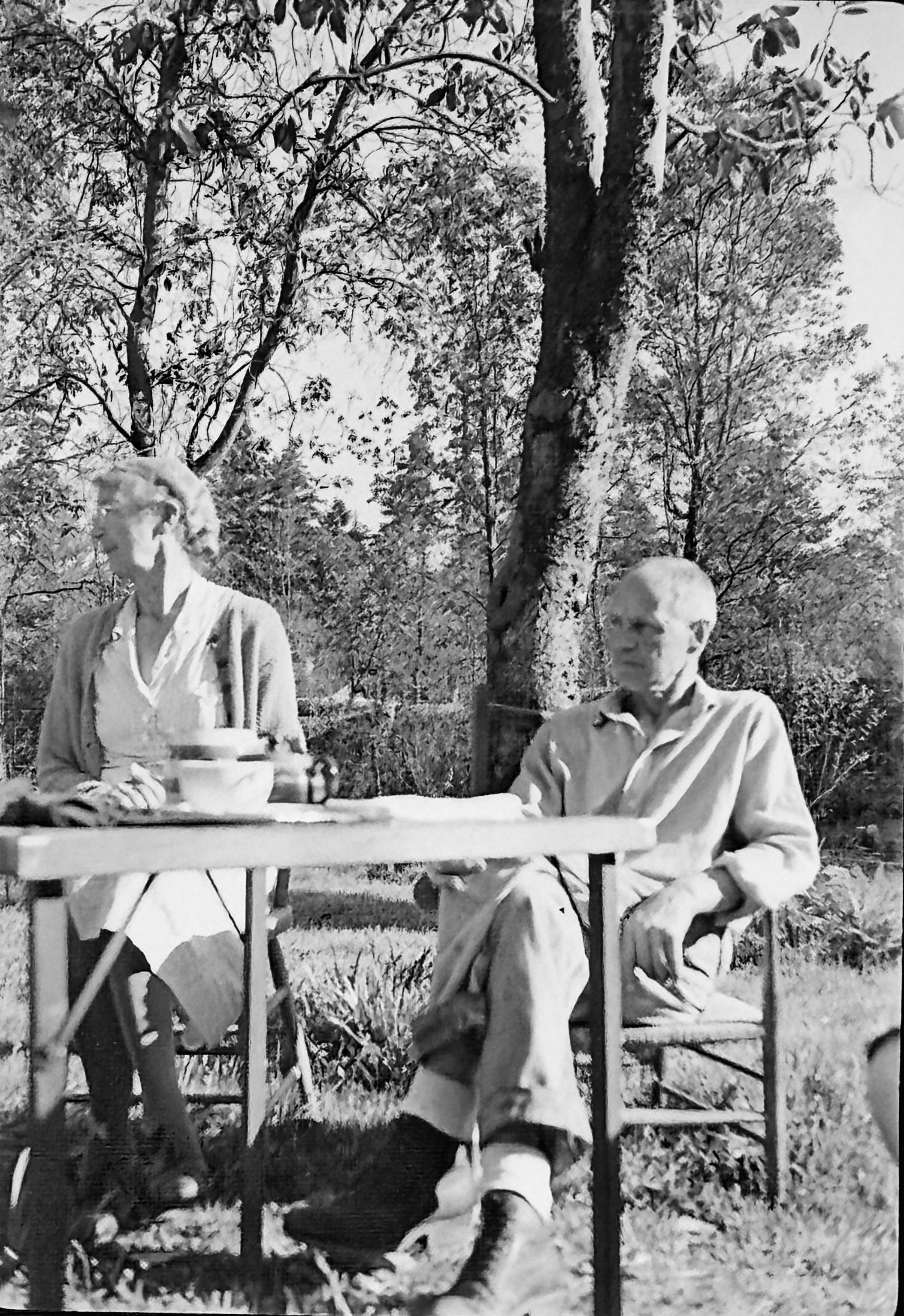
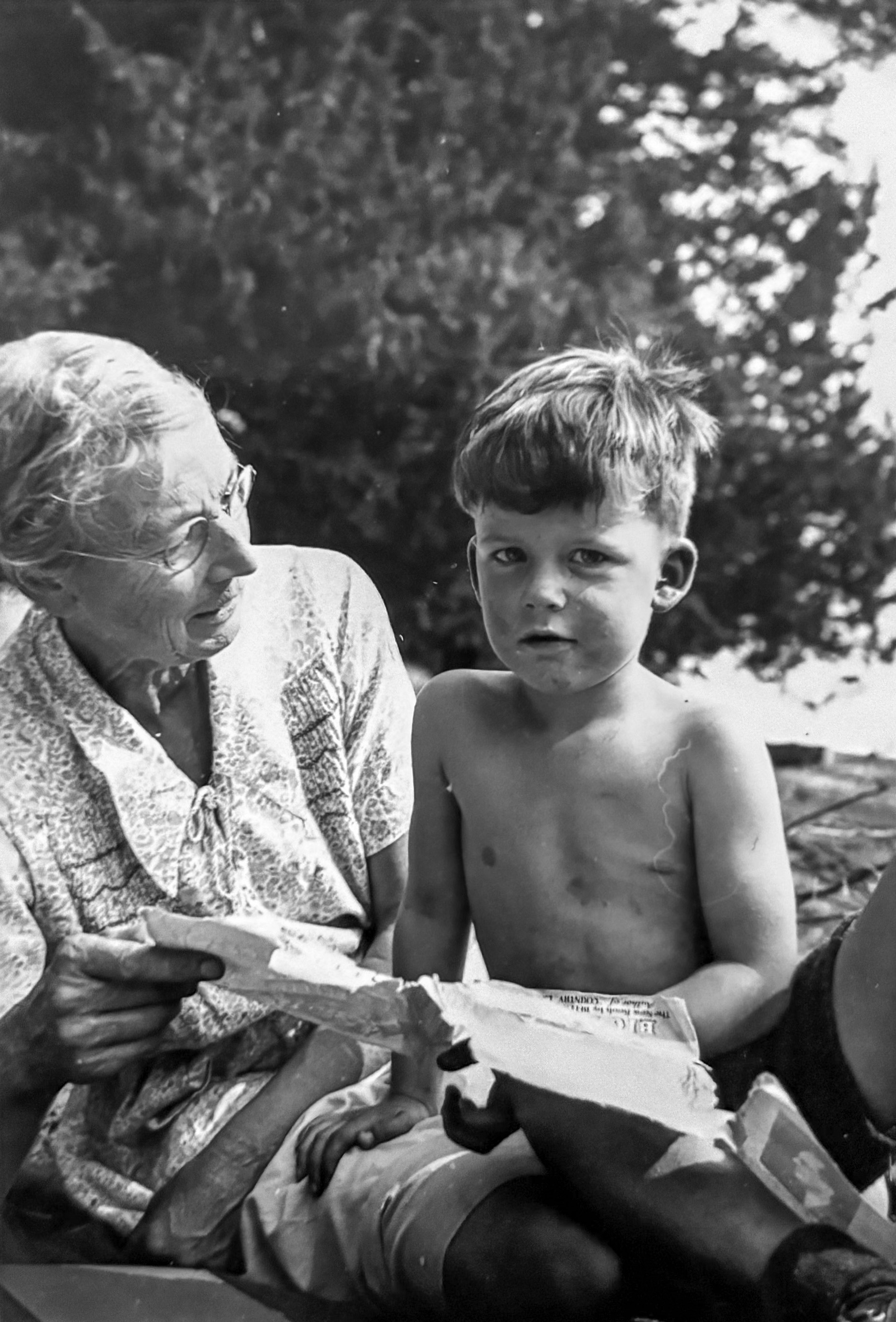
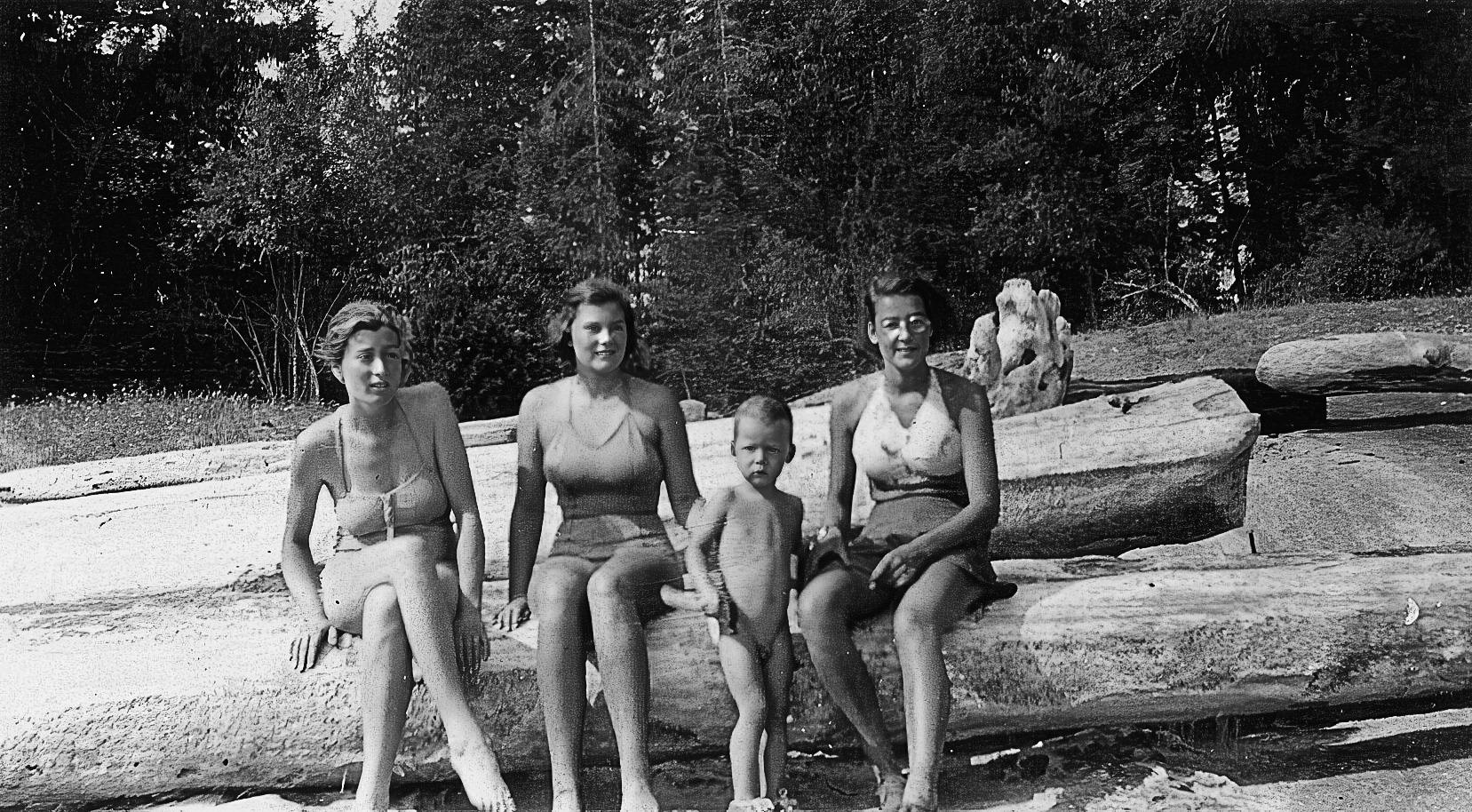
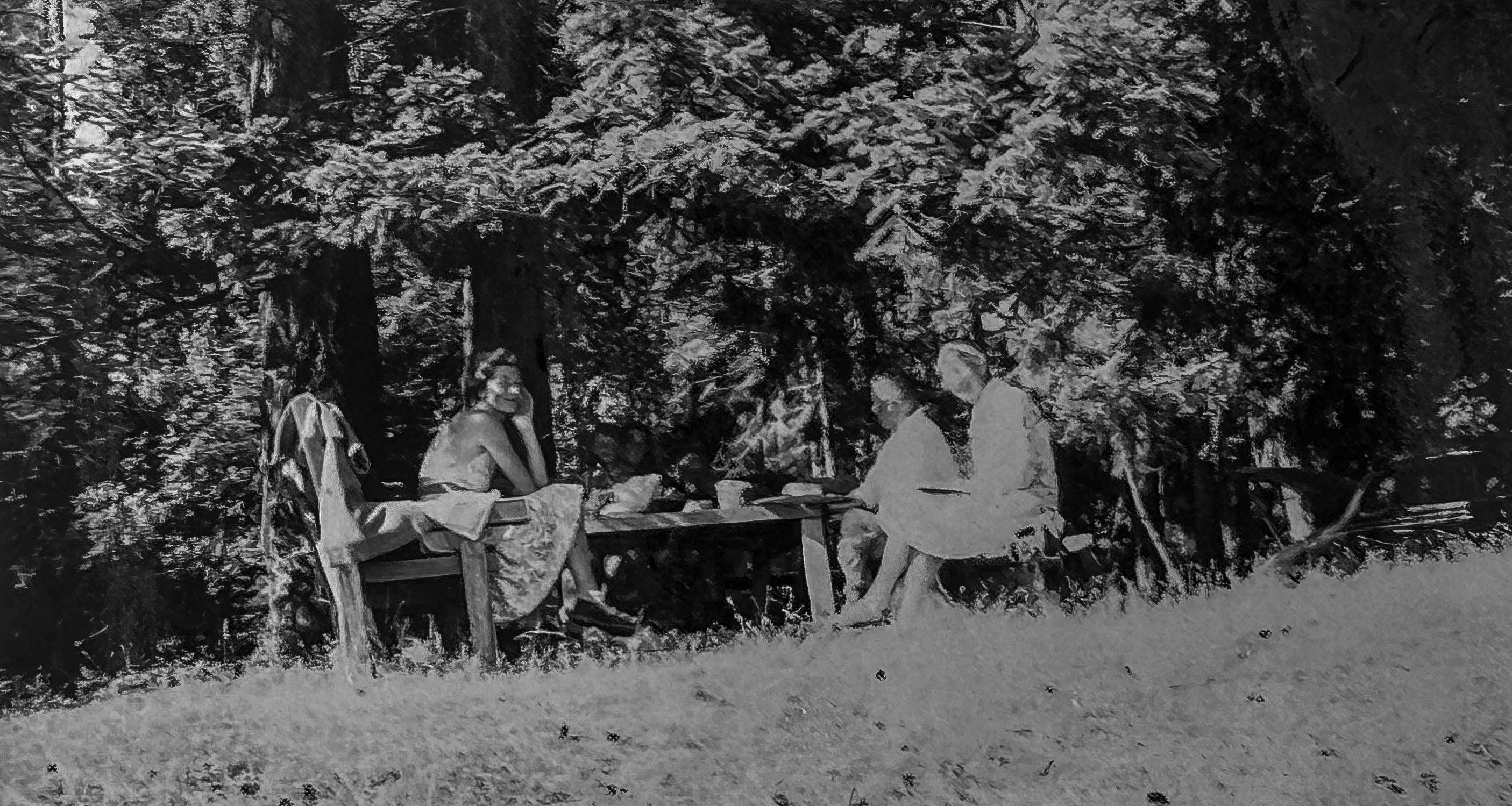
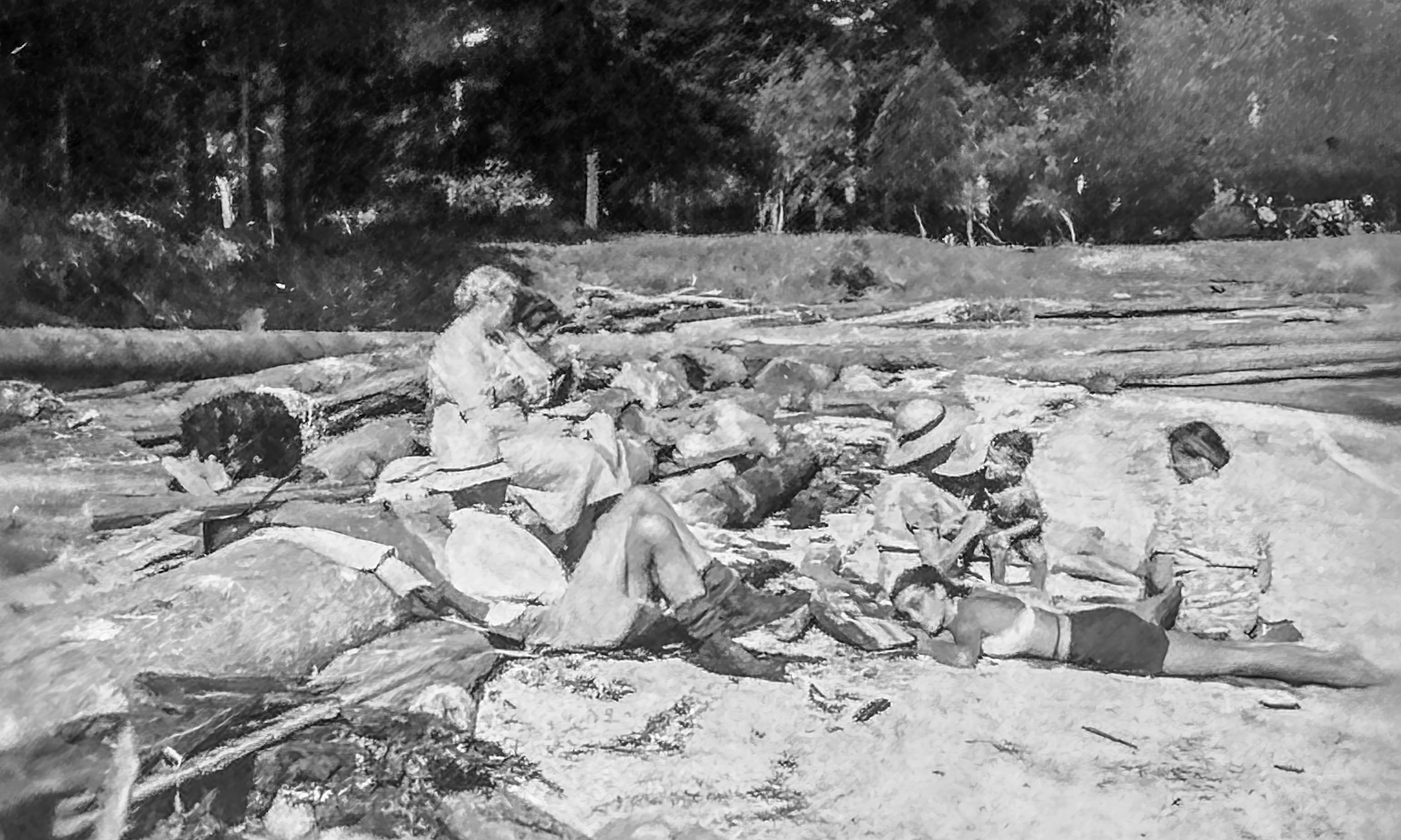
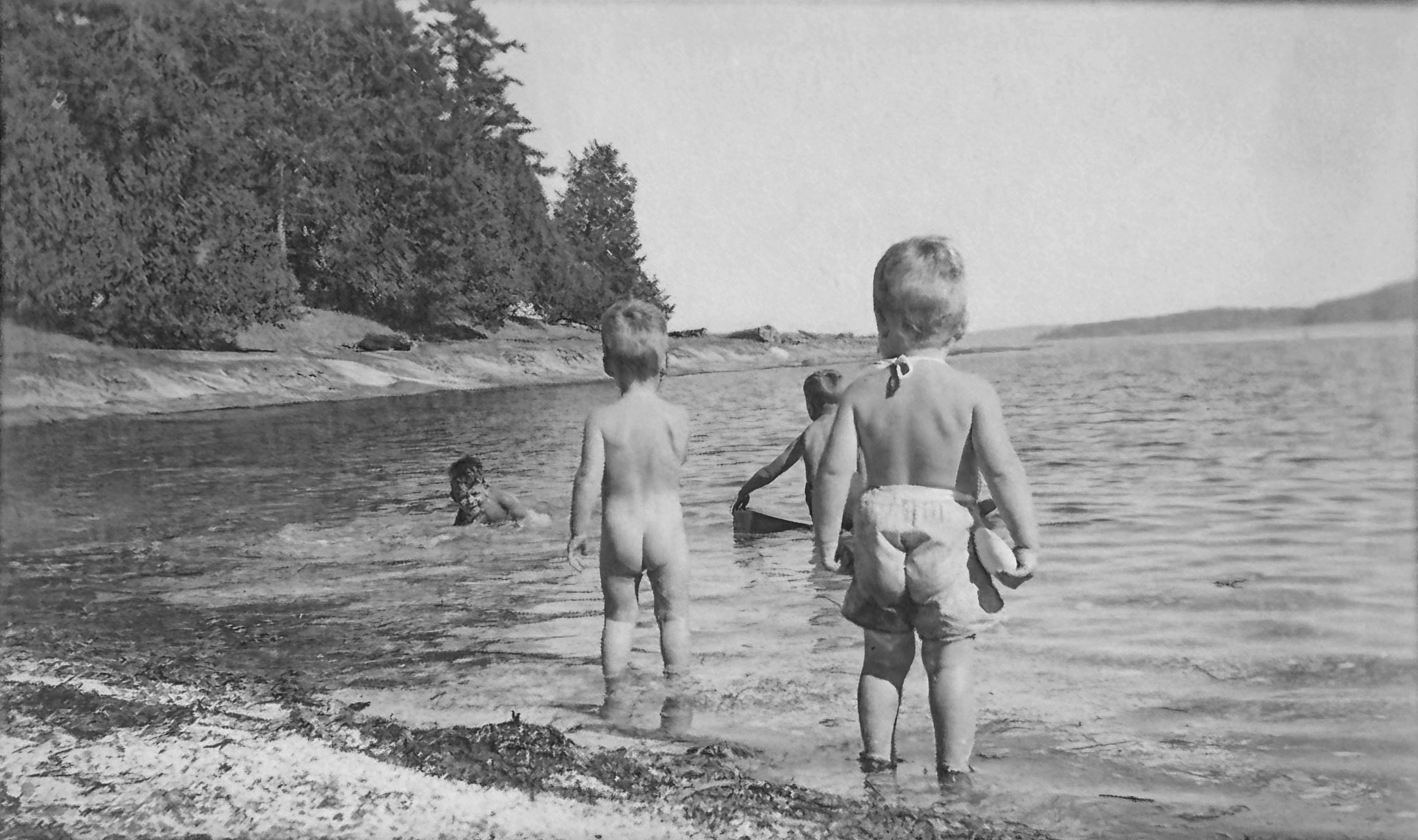
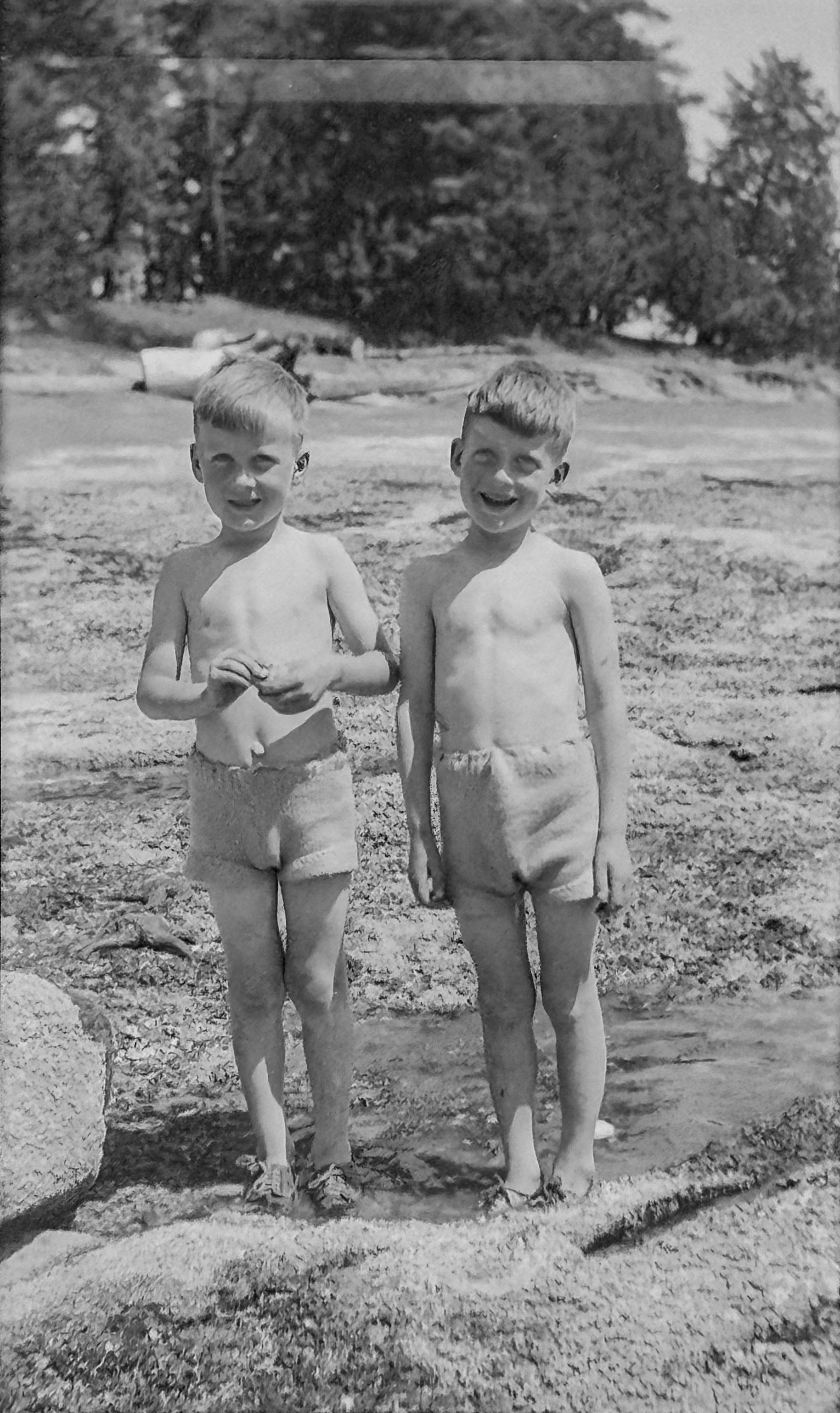
I am not sure how my parents became friends with Catherine and Barney Wilson and their permanent boarder George Howland, but they were much loved by all of us. In particular, George had rented a headland and sheltered beach on a little used portion of the reservation belonging to the local First Nation. Smooth sandstone rock, mounded up shell fragments left by a thousand years or more of food harvesting, watm warm water – it was an idyllic place to swim. Almost every Sunday during the summer we and others would picnic there.
 The Marion Project - A Family History