
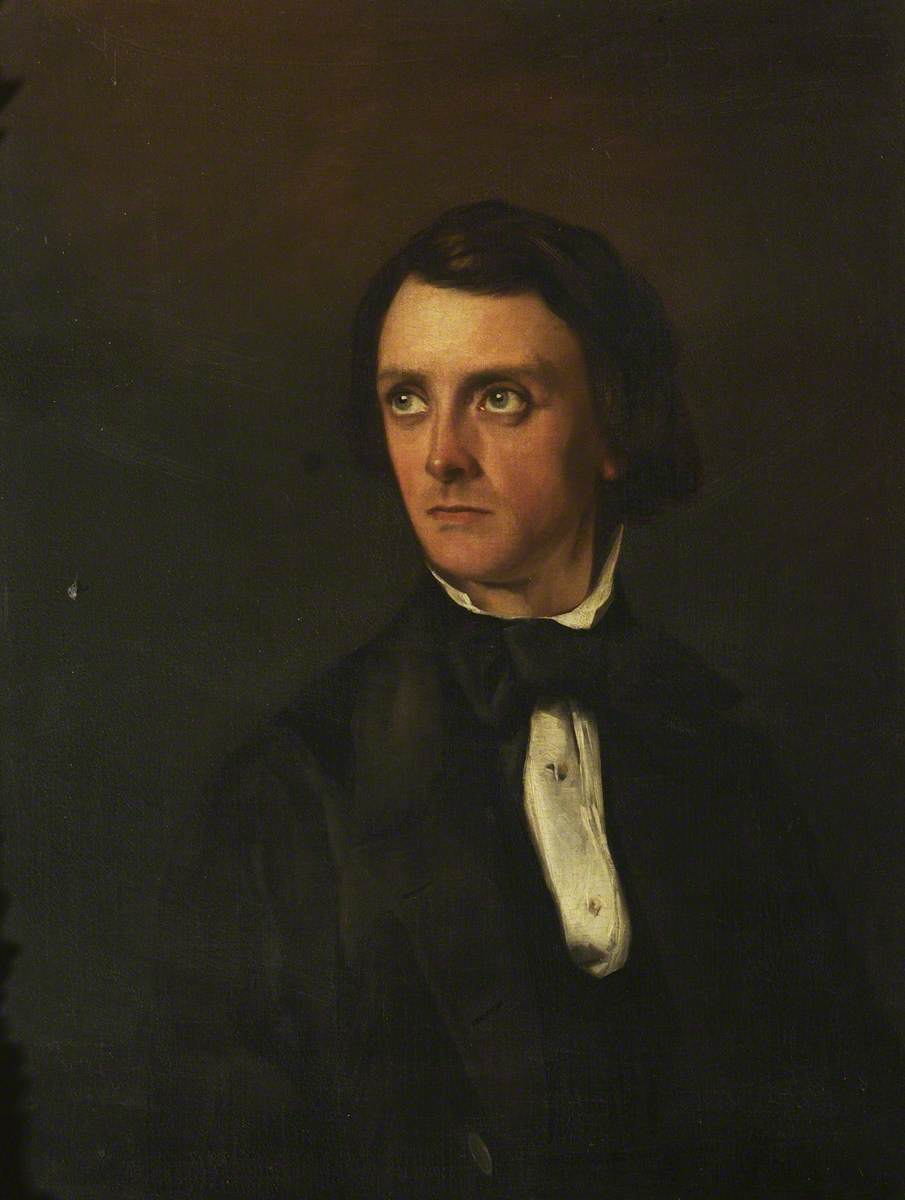

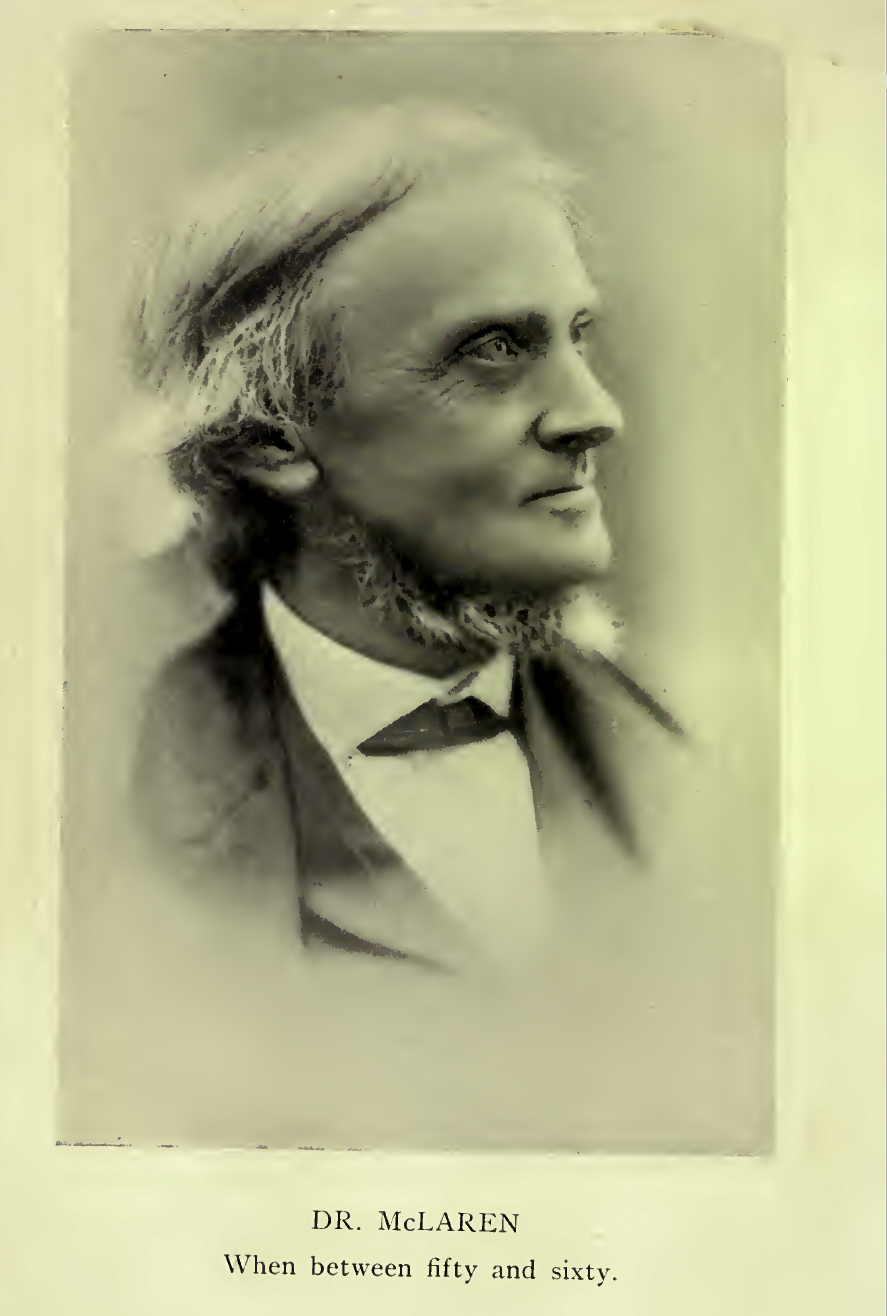
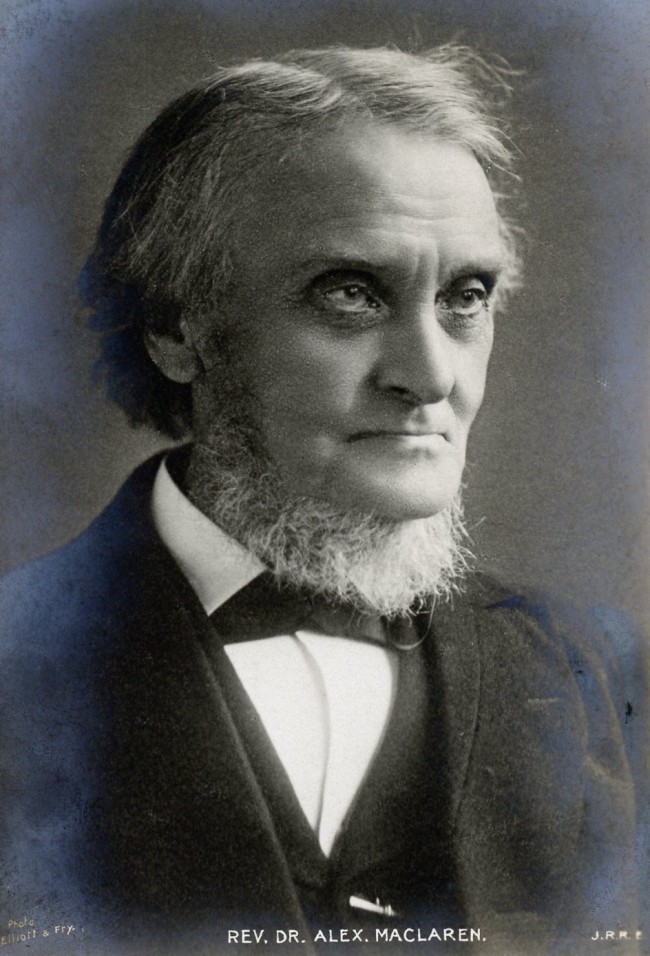

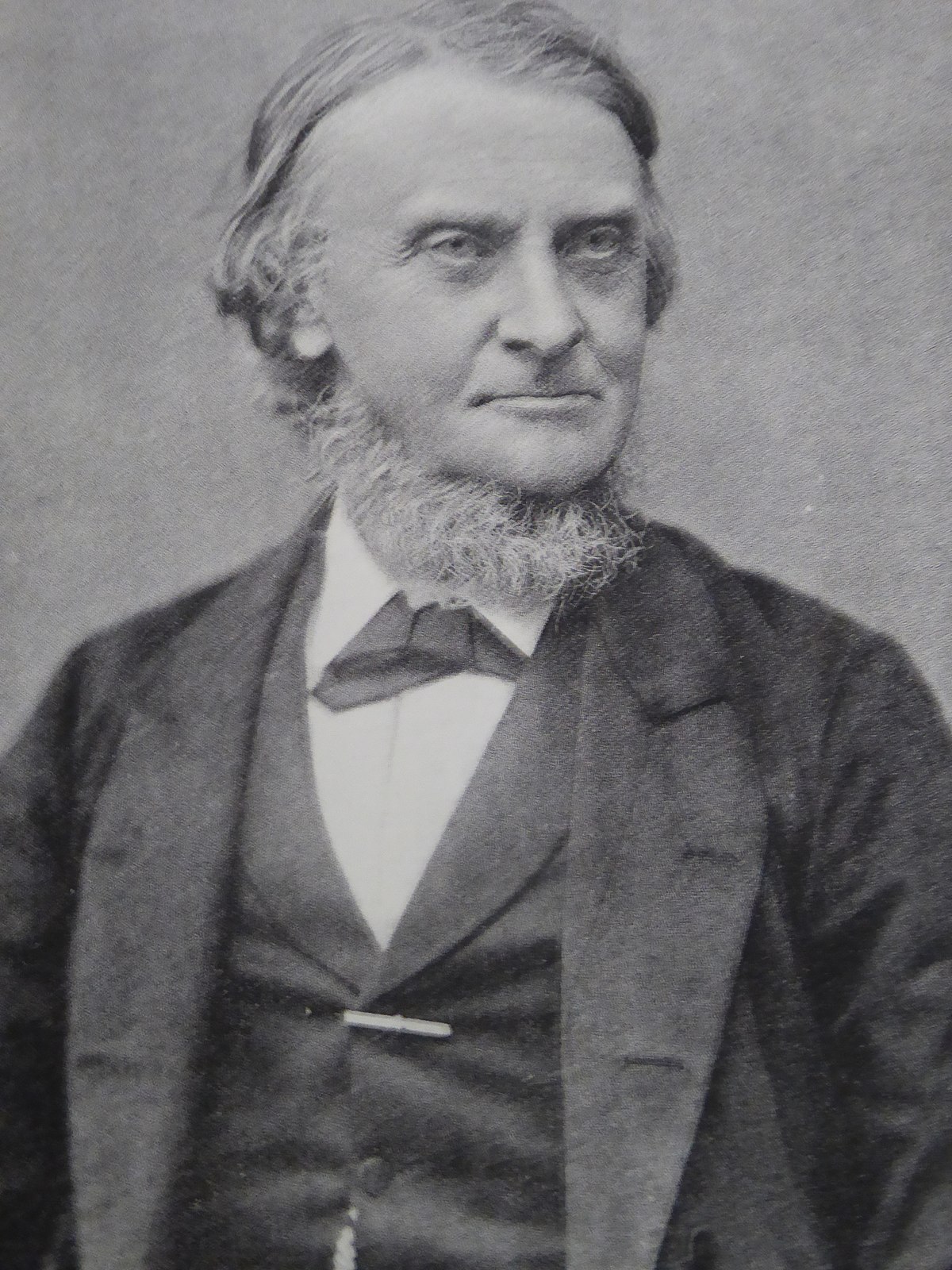
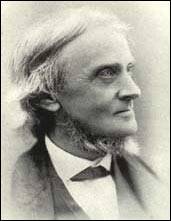
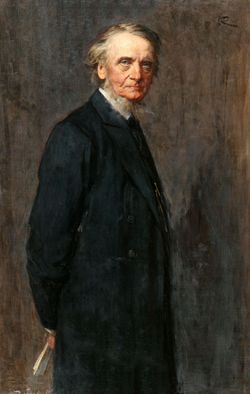
The fame and lasting legacy of Alexander Maclaren is such that there are many published documents detailing his life and works. The information sources we have used are cited below our brief sketch. Of note, there are other areas of this website that present Dr. Alexander Maclaren’s story, in particular https://projectmarion.ca/family-presentation-subject-jane-louisa-lejeune-february-1-2-2025/jane-louisa-lejeune-early-life-marriage-children/
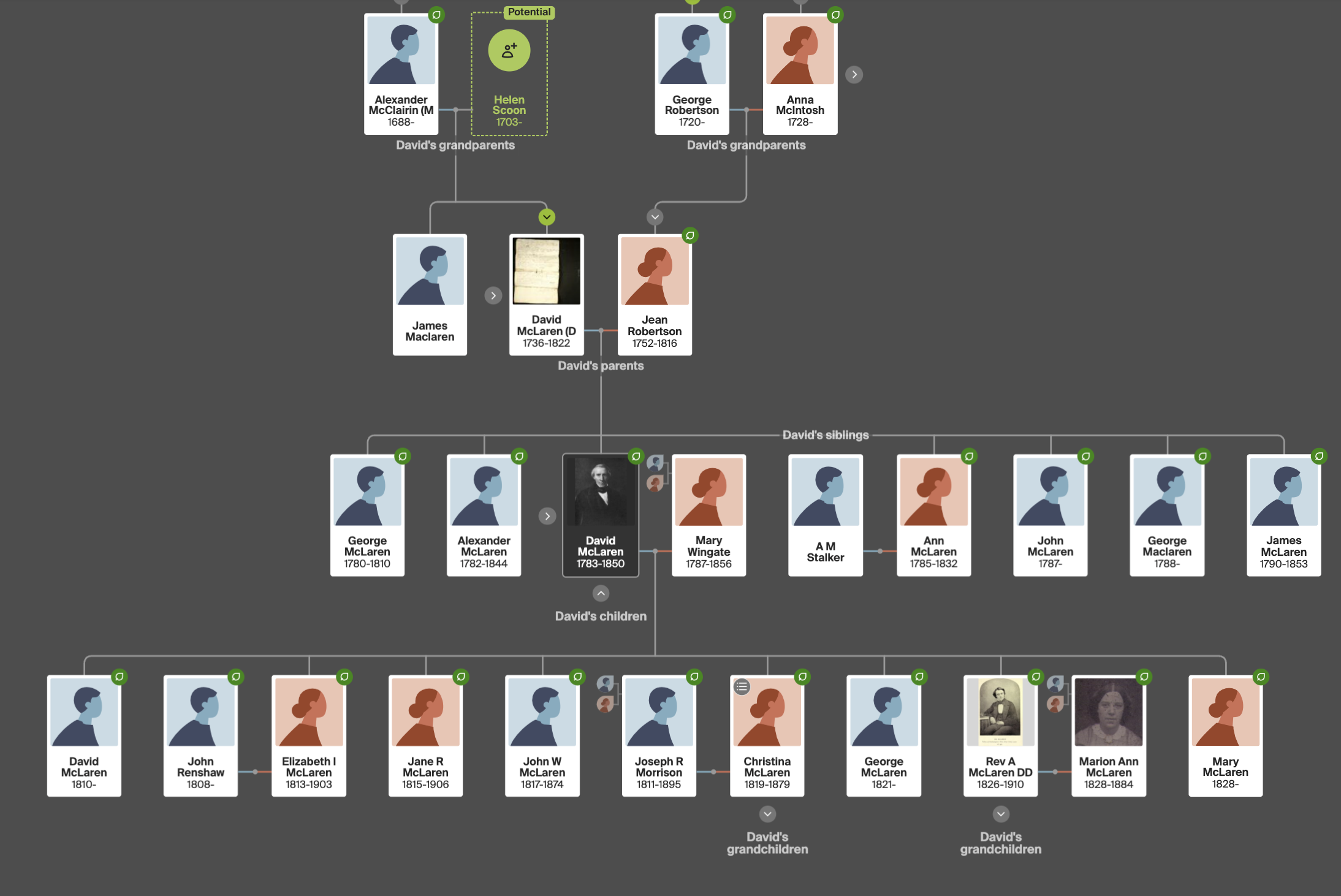
Alexander McLaren was born on 11 February 1826 in Glasgow, approximately 200 years ago.
Alexander’s father was David McLaren, his mother Mary Wingate McLaren. He was their ninth child. His oldest sibling was 16 at the time of Alexander’s birth, while his youngest was 5. Since his father David had five brothers and a sister, and his mother Mary had three brothers, Alexander was part of a large McLaren family, many of whom were in Edinburgh and who would play an important part in Alexander’s early years.
Alexander’s father David had been thought by his parents to be destined to become a minister in the Church of Scotland but, in his senior year of training he came under the influence of the evangelical movement and decided against that path. Instead he accepted a position in a business firm and fashioned a very successful career, one consequence of which was that, in 1836, he was offered and accepted, the position of manager of the South Australian Company. This saw him leave Glasgow and his family for four years and travel, a six month voyage, to Australia, Kangaroo Island and what was to become Adelaide. Australia family will know more of his impact on the country.
Before David’s departure family Sundays had two services, conducted by him and others, both of which Alexander would attend even though in his earliest years he was too young to understand their contents. There was no evening service – instead the time was devoted to education.
As a child Alexander, so separated in age from his siblings, spent a great deal of time alone, amusing himself. He was shy and did not want to be social, resisting invitations to play with other children but, when forced, nevertheless became fully engaged with the activity.
When still young, Alexander was taken by his father to Edinburgh, to meet and mingle with his Uncle James’ family and boisterous cousins. From then on he was always welcome and for the remainder of their time in Glasgow he and his family would spend Christmases in Edinburgh.

From an early age Alexander strived to learn his lessons perfectly, showing both intelligence and a capacity for great effort. He went through the curriculum of the High School of Glasgow and entered the University of Glasgow at age 14. When the family moved to London in 1840 he had to curtail taking his degree, but he remained behind in Glasgow long enough to be present at the annual prize-giving at which he was recipient of many awards.
In Glasgow he had also attended a Bible Class at which influential teachers developed and quickened his early impression of evangelical and Baptist beliefs. At age 14 he found himself wrestling with conscience, guilt, sins and salvation and ultimately he found, and I quote from what he wrote, “peace and pardon in believing that Christ is the Saviour. Since then I have found in reading the Bible and in prayer great joy and pleasure such as I never felt before.” He was baptized in May 1840.
For clarity, since Baptists look to the Bible as their sole authority for faith and practice, they believe that baptism is only for those who have put their faith in Jesus Christ as Lord and Saviour, and it is a voluntary lifelong commitment.
As a Baptist he was deemed to be a non-conformist and non-conformists were barred from Oxford and Cambridge so, in 1842 he entered Baptist College at Stepney for pastoral training. His brilliance was quickly recognized and he was marked as special.
There are many aspects to being a pastor, not just preaching to, one hopes, a growing congregation, but also fund raising for building a chapel or its subsequent maintenance, pastoral care, perhaps teaching Sunday School or evening Bible classes, giving mid-week lectures as part of the education of youth, and so forth.
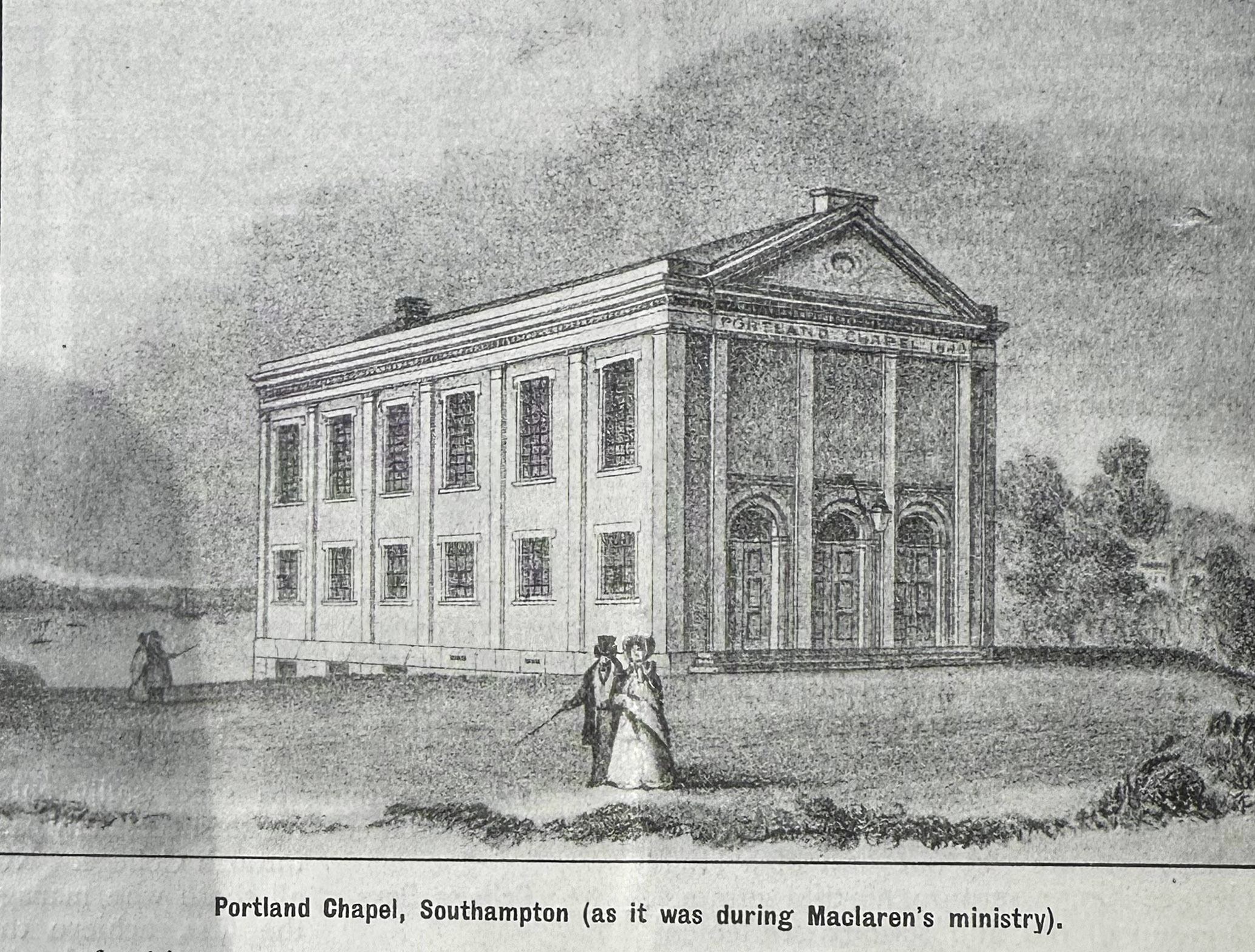
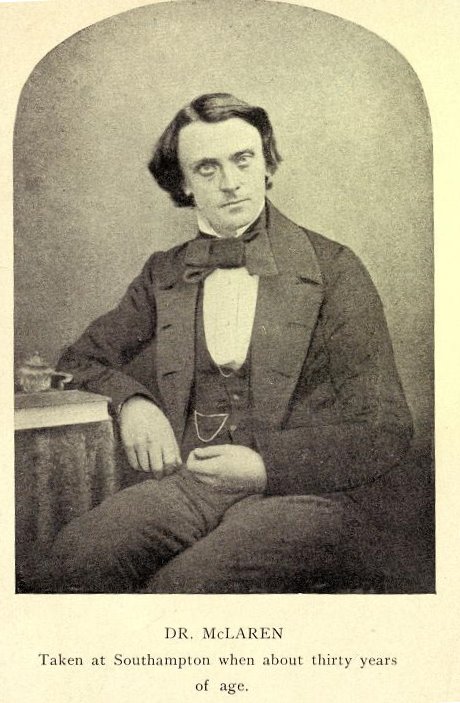
Although Portland Chapel in Southampton had opened with great promise, the first pastor resigned before completing his third year. His successor was a failure, lasting just two years. This forced a complete reorganization of the church and a resolve by those in charge to not repeat the prior mistakes. An invitation was made to Stepney College to provide a preacher for two services; the College had no hesitation in sending Alexander, on November 16, 1845, even before his degree was complete, and before his twentieth year. After the two services the invitation was extended to three months. He made such a good impression and his preaching was so popular, soon filling the Chapel, that he was unanimously invited to take up a permanent pastoral position there. After consultation with his father, Alexander accepted, and in 1846 began his ministry at Portland Chapel in Southampton. He would remain there twelve years, until 1858.
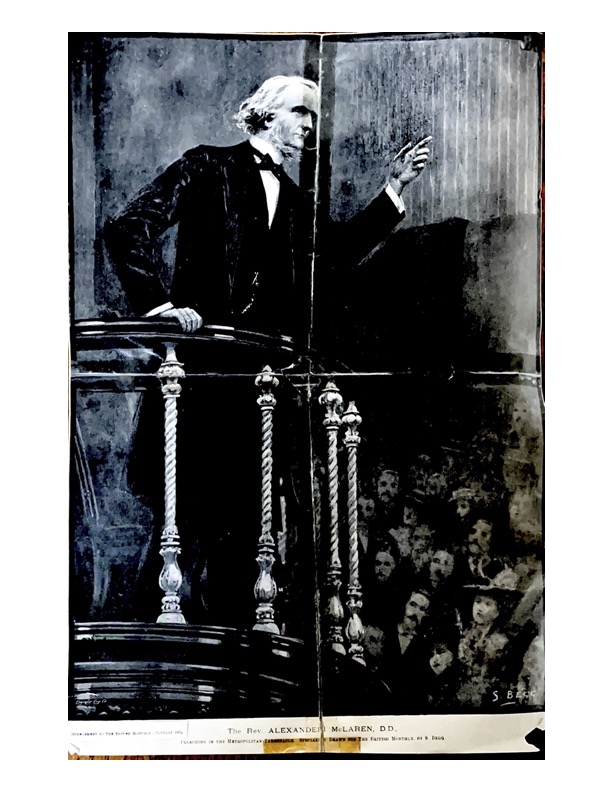
Alexander’s preaching was magnetic.
“Many attempts have been made to describe the effect it had upon his listeners, but it remains true that it was necessary to hear him before it could be truly understood…
“We may speak of the spare figure quivering with life and feeling; of the firm set mouth, the unmistakable sign of a tremendous will; of eyes that pierce and shine and seem to compass everybody and everything in their quick lightning glance; or of the strangely magnetic voice – but in vain.
“We may describe his preaching as ‘logic on fire’ or that his words thrill like electricity; that he speaks like one wholly possessed by his theme, or that the speaker’s tout ensemble gives one the best idea possible of etherealised matter, of spirit overpowering matter; but it fails”
Alexander worked tirelessly and continually at his pastorate. And his reputation spread – he constantly had to decline invitations to preach throughout Hampshire on Sundays or to deliver lectures on weekdays. But, as the years went by he often received advice to move to a larger parish, to spread has influence into a wider world.
In November 1855, Alexander McLaren became engaged to his first cousin Marion, James’ fourth daughter in the large family of Edinburgh cousins, someone he had known since early childhood. In March, 1856, during the Easter holidays, they were married at Marion’s home, a happy union which would last until her death in 1884.
Their first child, daughter Jane Louisa McLaren was born February 1, 1857 and a second daughter, Mary (Minnie) McLaren was born on February 22, 1858. Later that year Alexander finally acceded to the advice he had continued to receive to seek a wider world for his teachings and messages, and the family relocated to Manchester where Alexander became pastor of the Union Baptist Chapel on Oxford Street. There he served as Minister from 1858 until 1903.
Arrival at Union Chapel and Early Years in Manchester
From early on in Manchester, he presided over a flourishing congregation. The old building eventually proved too small, and under his leadership a new chapel was built. In 1869 the Union Chapel building, designed in a Lombardo‑Gothic style, was opened to accommodate about 1,500 worshipers; morning and evening services were generally full.
His preaching style, deeply expository, scholarly (he was thoroughly grounded in Greek and Hebrew), and yet with warmth and spiritual power, drew people from around the region. He seldom concerned himself overtly with political or current‑affairs preaching; his focus was on the biblical text and its spiritual application.
“Listeners came from all parts of the city – and beyond it. Some came in carriages, very many came on foot. There were no tram-cars or bicycles in those days, but many a young clerk or student who worked hard through the week found his way by 10.30 to Union Chapel, and left it refreshed in spirit and resolving to come again.” – Dr. McLaren of Manchester’s: A Sketch, E.T. McLaren
Under his pastorate, the church not only built a new chapel, but also established mission halls, Sunday schools and undertook outreach into poorer districts of Manchester and surrounding areas.
His days for many years were filled with prayer, biblical study, pastoral duties, speaking engagements, meetings with parishioners and his family life. He was extremely disciplined in his daily routine.
“Breakfast was early, and while taking it not only was he able to read letters, give at least a glance at them to arrange them methodically to be dealt with afterwards, but one could count on hearing him read out from the Manchester Guardian, proper up in front of him, all the essential news of the day.” – Dr. McLaren of Manchester: A Sketch, E.T. McLaren
In 1862, due to his wife’s poor health, he was granted several months of leave from his duties and he and Marion went to Italy. He wrote a book in 1865 about that trip titled “A Spring Holiday in Italy” in which he describes his impressions of Naples, Rome, Florence and Venice, and the state of the Kingdom of Italy overall (since it yet hadn’t become a unified nation).
Accolades and Recognition
Dr. McLaren’s work and his achievements in Manchester drew accolades and invitations for new opportunities throughout his long career. He received invitations to leave Manchester; for example in 1885 there was interest in making him professor of Hebrew at his old college (Regent’s Park). But he declined. Even though he disliked Manchester’s climate and complained of the burdens of pastorate work, he was driven to continue at his duties and felt committed to his congregation and the community.
He was much in demand as a speaker, not just in Baptist or denominational meetings, but in public and religious gatherings more broadly. He served twice as the President of the Baptist Union, in 1875 and 1901 and was president of the Baptist World Congress in 1905. He received honorary degrees: a Doctor of Divinity from Edinburgh in 1877, from Glasgow in 1907, and an honorary Litt.D at Manchester University in 1902.
Later Years, Retirement and Death
Toward the end of his active pastorate, his health started to decline. He took a year of enforced rest from 1881 – 1882 and after that only preached on Sundays for the rest of his career. His wife Marion died in 1884, a tremendous blow to him and their entire family. He mourned her deeply for the rest of his life (See Appendix).
In 1888 and the early part of 1889 he visited Australia and New Zealand as the representative of the English Baptist Union, speaking to audiences upwards of 3,000 in Adelaide, Melbourne and Dunedin. In 1896 he completed the fiftieth year of his ministry. In 1903, he officially retired from the active ministry, becoming pastor emeritus. His last regular Sunday service in Union Chapel was in June 1903.
After retiring, he preached less frequently, but continued writing and preparing publications. His productivity as an author remained high; many volumes of sermons, expositions, lectures, and commentaries bear his name.
In 1909, with Manchester becoming more suburban and less peaceful for him, he left his home in Fallowfield and moved to Edinburgh. He also presented his large personal library to the Baptist College in Manchester.
On 5 May 1910, after some weeks of illness, Alexander MacLaren died in Edinburgh. A simple funeral was held at Union Chapel, Manchester, and his ashes were interred at Brooklands cemetery near Manchester.
A tribute to his wife, Marion McLaren
In an appendix to Dr. McLaren of Manchester A Sketch E.T. McLaren includes a letter from Dr. McLaren to Sir William Robertson Nicoll. In it he writes a moving tribute to his wife Marion that acknowledges her influence on both his life and his work.
Dr McLaren also acknowledges his brother-in law Rev. David Russell. Rev. Russell was married to Jane McLaren, an older sister of Marion.
Appendix
Writing on September 1, 1905, to Sir William Robertson Nicoll in regard to a sketch of his career in the current issue of the British Monthly, Dr, McLaren said:-
“Had I known of the intention to publish, I should have craved an opportunity of supplying material to fill two regrettable gaps. I do not know whether you can do anything still to fill them up, but I should be grateful if it could be done somehow.
“The first of them touches on sacred matter, in regard to which I am habitually reticent, as I should and must be, but which should have foremost place in any notice of me. I refer to my married life. My wife, Marion McLaren, was my cousin. We were much together from our earliest days. Her father, James McLaren, was an Edinburgh citizen of high standing, a deacon for many years in Dr Lindsay Alexander’s church, and a compeer of worthies like Adam Black, Charles Cowan, George Harvey, and other strong men of their day. The atmosphere of his house was redolent of the best traditions of Scottish religion and culture, a home of plain living and high thinking. With all its large and happy group of children I was as a brother, and the childish bonds grew stronger and graver as the children grew to be men and women, and they are stronger than ever to-day between the few survivors and myself.

God allowed us to be together until the dark December of 1884. Others could speak of her charm, her beauty, her gifts and goodness. Most of what she was to me is forever locked in my heart. But I would fain that, in any notices of what I am, or have been able to do, it should be told that the best part of it all came and comes from her. We read and thought together, and her clear, bright intellect illumined obscurities and ‘rejoiced in the truth.’ We worked and bore together, and her courage and deftness made toil easy and charmed away difficulties. She lived a life of nobleness, of strenuous effort, of aspiration, of sympathy, self-forgetfulness, and love. She was my guide, my inspirer, my corrector, my reward. Of all human formative influences on my character and life hers is the strongest and the best. To write of me and not to name her is to present a fragment.
“I should also have wished to have had the name of the Rev. David Russell, Congregational minister, of Glasgow, mentioned. To him, under God, I owe the quickening of early religious impressions into living faith and surrender, and to him I owe also much wise and affectionate counsel in my boyish years. He became my brother-in-law at a later period, and during all his long and honoured ministry he was my friend. I deeply revere his memory. I know, as few did, his patient work, his quaint freshness of thought and speech, his simplicity of life and steadfastness in cleaving to duty, his profound devoutness and his large heart, and I should have liked to have had my great obligations to him set prominently forth.”
Dr. McLaren of Manchester A Sketch E.T. McLaren, APPENDIX pages 270 – 272
A “Lost and Found” Sermon
There is much about Dr McLaren that is still available in print and also on religious internet sites. Francesca Lejeune came across this story some years ago. She printed a hard copy of the story but the web address is now nowhere to be found. The same story can be found on other websites that have references to Dr McLaren. The story is particularly appealing because it includes Alexander’s father David McLaren, who was involved in the set up of the South Australia Company. We know that David was overseas in Australia for many years when Alexander was a young boy which makes the story even more poignant.
The story is attributed to Jeanette Mathew 18/4/2004 edited from Canberra Baptist Church Sermons
Texts: Ezekiel 34:11-16, Luke 15: 1-10
The Challenge of the Parables for us
As we hear these parables today where can we locate ourselves? You may be the lost sheep. Wandering in the wilderness, wondering if you’ve been forgotten, crying quietly to yourself or shouting out in indignation. If God is a searcher, then you will be found.
There is a story about Alexander McLaren-a great Scottish preacher of the 19th Century. He was only 16 when he accepted his first job in Glasgow and his home was about some distance from the big city. Between his home and his job there was a deep ravine that he had to walk through-a ravine was supposed to be haunted. He was afraid to go through it in the daytime, much less at night.
On Monday morning, the day his job was to begin, his father walked with him to work and in parting said, “Alex, come home as fast as you can when you get off Saturday night.” Thinking of that deep ravine, McLaren said he answered his father, “Father, I will be awfully tired Saturday night when I get off; I’ll come home Saturday morning.” But his father was insistent. “No Alex, you have never been away from home before and these five days are going to seem like a year to me. Come home Saturday night.” He reluctantly answered, “Alright father, Saturday night it will be.” And all week-long Alex said he worried about the black ravine. He said, “I even whistled to keep up my courage, when I looked down into the inky blackness, I knew I couldn’t go on.”
Big tears came unbidden, then suddenly he heard footsteps in the ravine, on the path. He started to turn and run, but he hesitated for the footsteps were familiar. He looked up and he reports, “Up out of the darkness and into the pale light as I watched came the head and shoulders of the greatest man on earth. When he came up to me he said, “Alex, I wanted to see you so badly that I came to meet you.”
God doesn’t wait for us to come home. God comes to meet us.
 The Marion Project - A Family History